
Numeraire (NMR) is the utility token of Numerai, an AI-driven quantitative research platform that connects data scientists’ machine-learning predictions with a global-equity hedge fund. Instead of requiring researchers to reveal their models or work with identifiable stocks, Numerai provides an obfuscated financial dataset and evaluates submitted predictions over time. This approach allows independent researchers to contribute stock-market forecasts while keeping their model designs private.
NMR supports performance-based staking, allowing participants to put tokens at risk on their own predictions. Positive scores can earn NMR payouts, while negative scores can burn part of the stake. The ecosystem combines the Numerai Tournament for data and scoring, a stake-weighted Meta Model that aggregates staked predictions, and a hedge fund that uses the combined signal to inform trades. Together, these components connect machine-learning research with token-based incentives. This guide explains how Numerai works, how Numeraire’s tokenomics are structured, the main risks to consider and how to trade NMR on BingX.
What Is Numeraire (NMR)?
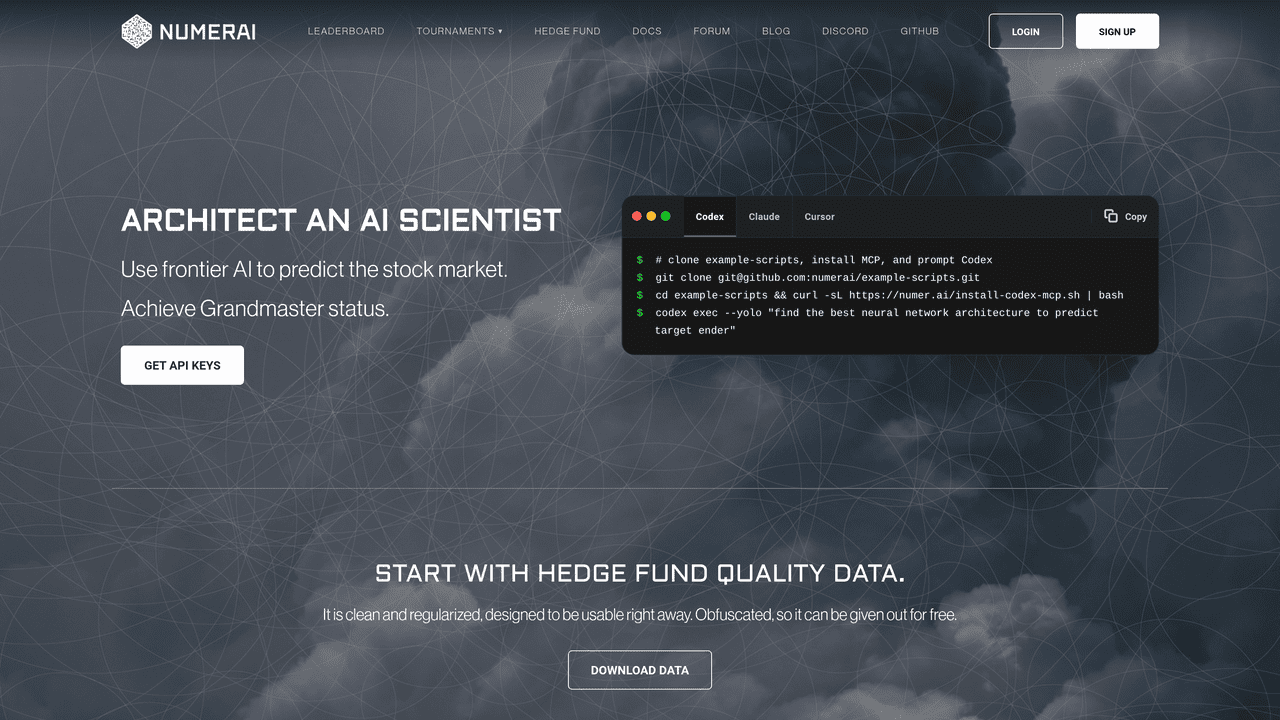
Numerai is a quantitative research platform that uses machine learning to generate stock-market predictions. It runs an ongoing data-science tournament where participants train models on an obfuscated financial dataset and submit forecasts for scoring. The dataset hides stock identities and feature meanings, allowing researchers to build models without knowing which companies they are analyzing. Participants submit predictions rather than model code, keeping their research methods private. Staked submissions are then combined into Numerai’s Meta Model, which helps generate signals for its hedge fund.
Numeraire (NMR) is the Ethereum-based utility token that supports this incentive system. Participants can optionally stake NMR on their own predictions, with strong performance earning NMR payouts and poor performance putting part of the stake at risk of being burned. Only staked predictions contribute to the stake-weighted Meta Model, linking model confidence with financial consequences. Holding NMR does not provide ownership of Numerai or a share of the hedge fund’s returns.
Key components of the Numerai ecosystem include:
- Obfuscated Dataset: Financial features and prediction targets that let participants train models without revealing stock identities or the meaning of individual features.
- Numerai Tournament: The platform where data scientists submit predictions and receive scores as actual market outcomes become available.
- Stake-Weighted Meta Model: The combined prediction model that weights staked submissions and helps inform Numerai’s hedge-fund trading process.
- Numeraire (NMR): The utility token used for optional performance-based staking, payouts, and burns on participants’ own submissions.
How Does Numerai Work?
Numerai combines a machine-learning tournament with NMR-based staking to turn independent stock-market forecasts into a signal for its hedge fund. Data scientists build their own models using Numerai's obfuscated dataset, submit predictions for scoring, and can stake NMR on those forecasts to give them weight in the Meta Model.
- Numerai provides an obfuscated financial dataset: Each row represents a stock at a specific point in time, with quantitative features and targets linked to future performance. Stock identities and feature meanings are hidden so participants can build models without seeing Numerai's proprietary market data.
- Data scientists train their own models: Participants can use their preferred programming languages and machine-learning methods to predict the supplied targets. They submit prediction files rather than source code, allowing them to keep their model designs private.
- Predictions are submitted and scored: Numerai releases new live data Tuesday through Saturday. Researchers generate forecasts and upload them to the tournament, where scores measure predictive performance as market outcomes become available.
- NMR staking links confidence to financial outcomes: Participants can optionally stake NMR on their own predictions. Strong scores can earn NMR payouts, while poor scores can burn part of the stake, so returns depend on model performance rather than a fixed staking yield.
- Staked predictions feed the Meta Model: Numerai combines staked submissions into a stake-weighted Meta Model used to inform its hedge fund's trading process. Unstaked submissions can still receive scores, but they do not contribute weight to the aggregate model.
Numerai vs. Allora: What Are the Differences Between the Decentralized AI Networks?
Numerai and Allora both use incentives to improve machine-learning predictions, but they serve different purposes. Numerai focuses specifically on stock-market forecasting for its hedge fund, while Allora supports decentralized prediction and inference across many topics, including financial markets. Numerai combines staked tournament submissions into a Meta Model, while Allora combines outputs from competing inference workers and forecasters into network-level predictions.
|
Comparison |
Numerai |
Allora |
|
Core purpose |
Financial prediction for Numerai’s hedge fund |
Decentralized prediction across multiple topics |
|
Contributors |
Data scientists submit model predictions |
Workers submit model inferences and forecasts |
|
Aggregation |
Staked predictions form a Meta Model |
Worker outputs form a network inference |
|
Token role |
NMR supports staking, rewards, and burns |
ALLO supports staking, rewards, and network payments |
|
Reward model |
Rewards depend on prediction performance |
Rewards depend on inference quality and contribution |
|
Main use case |
Quantitative equity forecasting |
General-purpose decentralized AI forecasting |
The main difference is specialization. Numerai is built around one financial objective, improving equity signals for a hedge fund. Allora is designed as a broader decentralized intelligence network where different machine-learning models can compete and contribute predictions across many topics. Allora's Forge competitions also let model builders compete for rewards based on prediction accuracy.
Read More: What Is Allora (ALLO), the Decentralized AI Network Powering Collective Intelligence?
What Are the Numeraire (NMR) Tokenomics?
NMR is Numerai’s Ethereum-based utility token, used to connect model predictions with financial incentives. Its tokenomics combine a maximum supply of 11 million NMR, optional performance-based staking and token burns. Participants put NMR at risk on their own submissions, with rewards and losses determined by model scores.
NMR Token Utility and Supply Mechanisms
- Model staking: Participants can stake NMR on their own predictions to express confidence in their models. Staking is optional, and submissions can receive scores without committing tokens.
- Performance payouts: Positive scores can earn additional NMR when a scoring round resolves. These payouts depend on model performance rather than a fixed interest rate.
- Token burns: Negative scores can cause part of a participant’s stake to be burned. Burned tokens become permanently unusable, reducing total supply once the burn is settled on-chain.
- Meta Model weighting: Staked predictions contribute to Numerai’s stake-weighted Meta Model, which its hedge fund uses to inform trades. Unstaked predictions receive no weight in this aggregate model.
- Capped supply: NMR’s maximum supply is 11 million tokens. Payouts redistribute existing NMR, while confirmed burns reduce the amount in existence. Holding or staking NMR does not provide equity, governance rights or a share of hedge-fund profits. Numerai’s documentation explains these mechanisms.
NMR Token Allocation
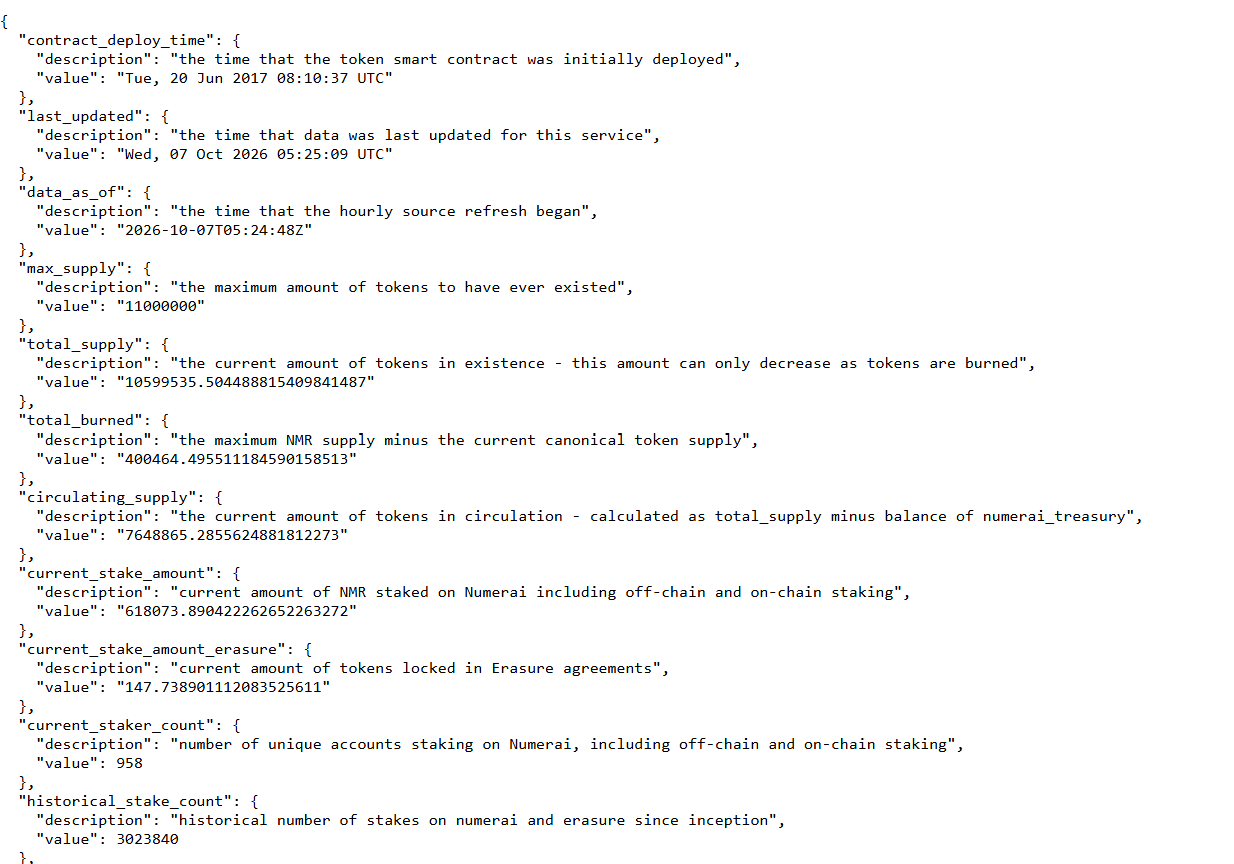
Source: Numeraire Docs
Numerai’s current token documentation focuses on supply, treasury balances, and staking activity rather than providing a full allocation and vesting breakdown for team, investors, and community participants. As of October 7, 2026, the main supply figures are:
- Maximum supply: 11 million NMR. The maximum number of NMR tokens that can exist.
- Total supply: approximately 10.60 million NMR. The amount remaining after confirmed token burns.
- Circulating supply: approximately 7.65 million NMR. The portion of supply outside Numerai’s published treasury wallets.
- Treasury holdings: approximately 2.95 million NMR. Tokens held in Numerai’s disclosed treasury addresses.
- Burned supply: approximately 400,464 NMR. The difference between the 11 million maximum supply and current total supply.
These figures describe NMR’s current supply structure rather than its original token allocation. Future supply dynamics depend mainly on treasury movements, staking activity, and additional burns. A capped maximum supply and ongoing burns can reduce available supply, but they do not guarantee higher NMR prices.
How to Trade Numeraire (NMR) on BingX
BingX offers two ways to gain exposure to Numeraire. Spot trading lets users buy and hold NMR directly, while perpetual futures let traders take long or short positions on NMR price movements.
Spot Trading: Buy and Own NMR Directly
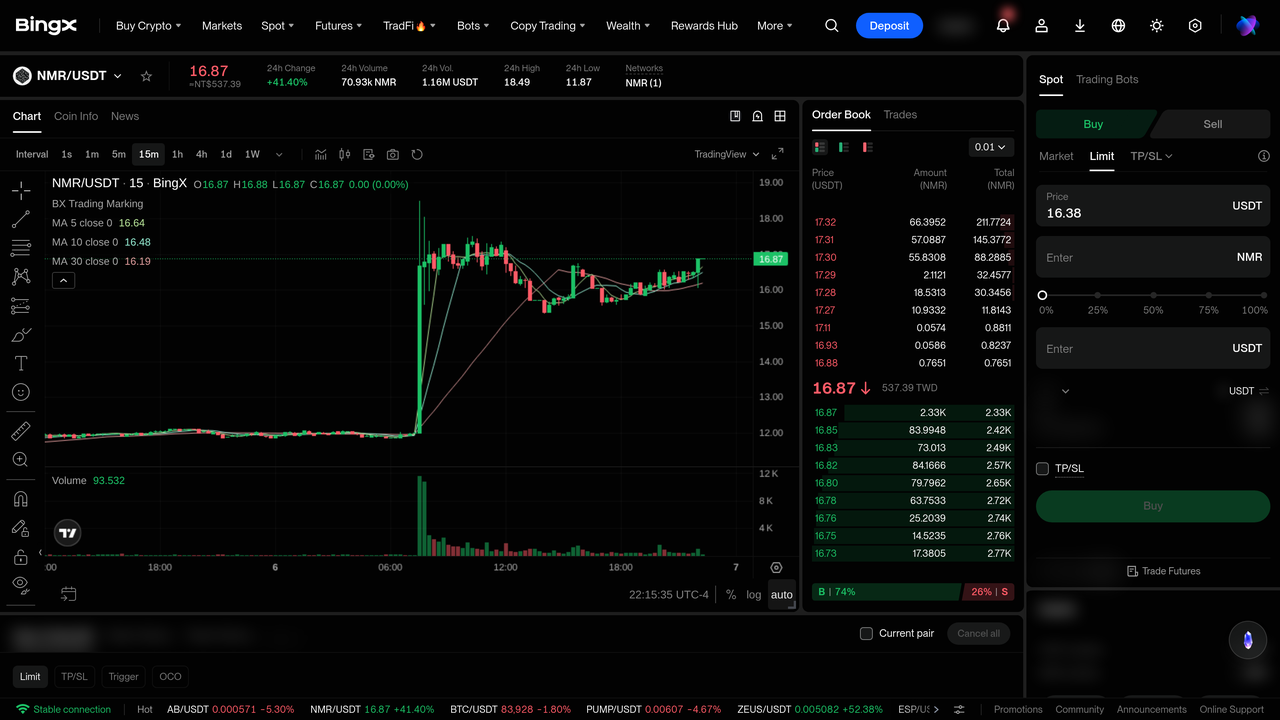
Step 1: Account setup and security. Sign up and log into your BingX account, complete the identity verification (KYC) required in your region, and enable two-factor authentication.
Step 2: Fund your spot account. Deposit USDT or another supported asset into your BingX spot account. Where available, users can also use supported fiat on-ramp options.
Step 3: Open the spot market. Search for the NMR/USDT pair.
Step 4: Choose an order type. Use a market order to buy NMR at available market prices, or a limit order to specify your purchase price. A limit order fills only if matching liquidity becomes available.
Step 5: Manage your NMR. After the order fills, NMR appears in your spot account. You can hold it on BingX or withdraw it to a compatible wallet when withdrawals are available, after confirming the supported network and receiving address.
Futures Trading: Trade NMR Price Movements
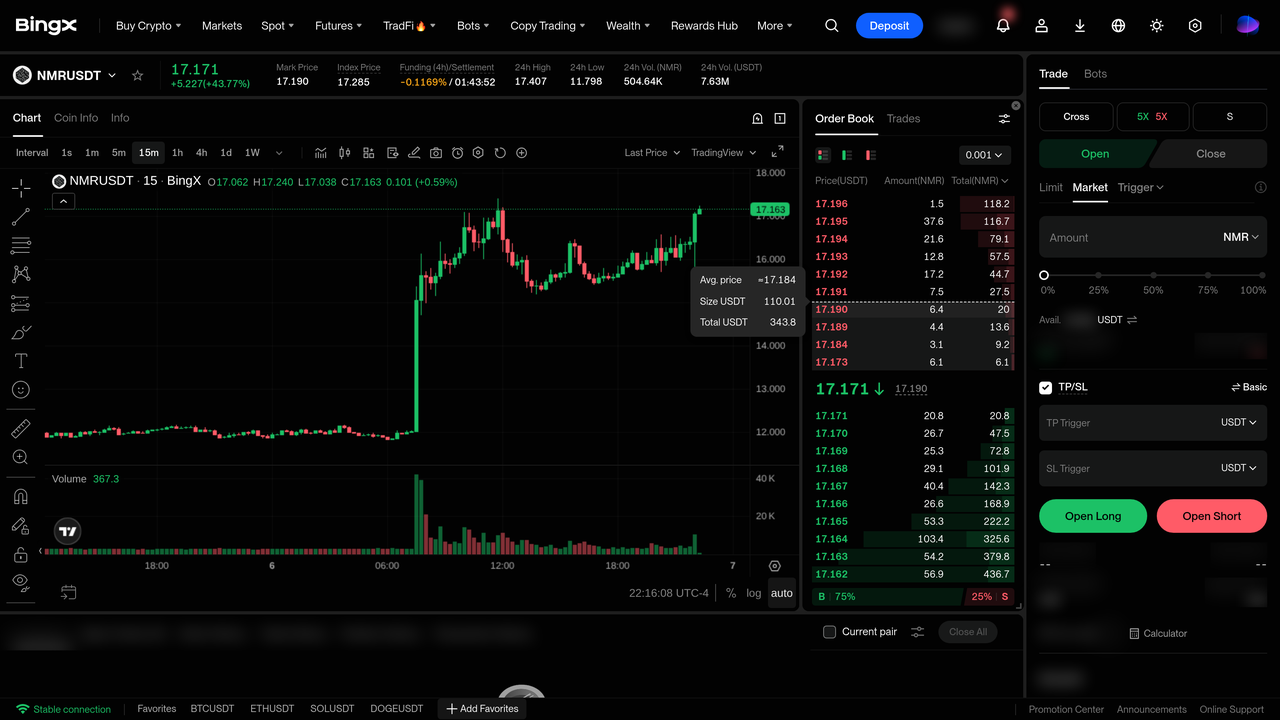
BingX lists an NMR-USDT perpetual contract for trading NMR price movements without holding the token directly. Leverage can amplify both gains and losses, so traders should understand liquidation risk and define their position size before entering a trade.
Step 1: Account setup and security. Sign up and log into your BingX account, complete the identity verification (KYC) required in your region, and enable two-factor authentication.
Step 2: Transfer collateral. Move USDT into your futures account, where it serves as margin.
Step 3: Select the contract. Open the NMR-USDT perpetual contract.
Step 4: Set direction and leverage. Open long if you expect NMR to rise, or open short if you expect it to decline. Choose your margin mode, leverage and position size according to your risk plan.
Step 5: Execute the trade. Enter the order amount and select a market or limit order. Review the margin requirement, trading fees and estimated liquidation price before confirming.
Step 6: Manage risk. Set stop-loss and take-profit orders before or immediately after entry. Monitor your margin balance and funding payments while the position remains open.
Risks and Considerations Before Investing in Numeraire (NMR)
Numeraire’s outlook depends on whether Numerai can sustain research participation and demand for NMR staking. Investors should consider both the token’s market risks and the performance risks faced by participants who stake on their models.
- Model performance can lead to losses: Strong historical results do not guarantee accurate live predictions. Negative scores can burn part of a participant’s staked NMR, making model staking an activity with capital at risk.
- NMR does not provide hedge-fund ownership: Holding or staking NMR gives no equity, dividends or claim on Numerai’s fund returns. A successful hedge fund therefore does not automatically translate into returns for token holders. Numerai’s token documentation confirms these limitations.
- Obfuscated data limits interpretation: Hidden stock identities and feature meanings make it harder to explain what drives predictions or assess exposure to specific companies and market events.
- Supply reductions do not guarantee price growth: Burns reduce total supply, but treasury distributions can increase circulating supply. Investors should monitor treasury balances, staking activity and demand alongside official supply data.
- NMR can remain highly volatile: Changes in liquidity, research participation and broader crypto-market sentiment can affect its price. Leveraged futures add liquidation risk and can amplify losses.
Final Thoughts: Should You Invest in Numeraire (NMR) in 2026?
Numeraire connects machine-learning research with token-based incentives through Numerai’s stock-market prediction tournament. Its obfuscated dataset, stake-weighted Meta Model and performance-based payouts give NMR a defined role in the platform. However, holding NMR does not provide ownership of Numerai or exposure to its hedge fund’s returns, as its official documentation makes clear.
The key question for 2026 is whether sustained research participation translates into durable demand for NMR staking. Investors can monitor active staked models, staking balances, treasury holdings, circulating supply and confirmed burns. Growth in participation and staking would strengthen evidence of platform usage, but token returns still depend on demand, liquidity and broader market conditions. NMR’s investment case should therefore rest on measurable activity and an understanding of its risks, alongside interest in AI-driven finance.
Related Reading
- Best Artificial Intelligence (AI) Cryptocurrencies to Invest in Brazil in 2026
- What Are the Top 10 AI Crypto Projects to Watch in 2026?
- What Are AI Agents in Cryptocurrency? A Complete Guide for 2026
- What Are the Top 10 AI Agent Crypto Projects of 2026?
- What Is Allora (ALLO), the Decentralized AI Network Powering Collective Intelligence?
- What Is Ethereum (ETH)? A Beginner's Guide to How Ethereum Works (2026)
FAQs About Numeraire (NMR)
1. What makes Numerai different from other machine-learning platforms?
Numerai runs a stock-market prediction tournament using obfuscated financial data. Participants can stake NMR on their own predictions, earning payouts for positive scores or losing part of their stake through burns for negative scores. Staked predictions contribute to the Meta Model used by Numerai’s hedge fund. Numerai’s documentation explains this process.
2. What blockchain is NMR on?
Numeraire is an ERC-20 token on Ethereum. Users should confirm the supported withdrawal network and verify the token contract through Numerai’s official links before transferring NMR.
3. What is the NMR supply?
NMR has a maximum supply of 11 million tokens. Confirmed burns reduce total supply, while Numerai calculates circulating supply by subtracting its published treasury balances from total supply. Current figures are available through its official supply data.
4. Does holding NMR give you a share of Numerai’s hedge-fund returns?
No. Holding or staking NMR provides no equity, dividends, governance rights or claim on hedge-fund profits. Staking rewards depend on a participant’s own prediction scores, as explained in Numerai’s token documentation.
5. Which wallets support NMR?
NMR can be stored in Ethereum-compatible wallets that support ERC-20 tokens, such as MetaMask. Select Ethereum and verify the official NMR contract when adding the token or arranging a transfer.
