As crypto exchanges expand beyond digital assets, more traders can access U.S. stocks and stock-linked products alongside their crypto holdings. Liquidity remains an important consideration: the available buying and selling interest, bid-ask spread, and order size can all influence how close an executed trade comes to the price a trader expects.
BingX brings U.S. stock and ETF trading together with crypto through its integration with Alpaca, giving eligible users access to more than 7,000 securities using USDT or USDC. This guide compares BingX with other crypto platforms offering U.S. stocks or stock-linked products, focusing on liquidity, trading costs, market access, and the differences between holding shares and trading tokenized exposure.
What Is Liquidity in U.S. Stock Trading?
U.S. stock liquidity refers to how easily shares can be bought or sold without significantly affecting their market price. Highly liquid stocks generally have more active buyers and sellers, resulting in tighter bid-ask spreads, lower slippage, and more efficient trade execution. On BingX, traders can access a broad selection of U.S. stocks and ETFs, although liquidity varies depending on the security, trading hours, and order size.
Liquidity also affects trading costs. For example, a $10,000 purchase of a stock priced at $100 per share may execute close to that price if sufficient shares are available. However, if there are not enough sellers at $100, part of the order may execute at higher prices, such as $100.50 or $101, increasing the average purchase cost. This difference is known as slippage. Actual execution also depends on market conditions, order routing, and the trading product. Tokenized stocks have separate liquidity from their underlying shares. Understanding these factors helps traders evaluate execution conditions, compare trading costs, and select appropriate order sizes.
Read More: What Is Liquidity in TradFi Trading and How Does It Work on BingX?
How to Choose a U.S. Stock Trading Platform: 5 Key Factors
A strong U.S. stock trading platform should offer more than a broad selection of stocks and low trading fees. The best platforms combine deep liquidity, tight bid-ask spreads, competitive trading costs, reliable execution, and flexible market access. These factors help traders reduce trading costs, execute orders efficiently, and access a wider range of U.S. stocks and ETFs.
- Deep liquidity and efficient trade execution: Look for platforms that provide access to U.S. stocks with substantial buying and selling activity near the current market price. Strong liquidity helps larger orders execute with less price impact, particularly for widely traded stocks and ETFs.
- Tight bid-ask spreads and low slippage: Compare the difference between buying and selling prices across individual stocks. Narrower spreads and lower slippage generally reduce execution costs, especially during volatile markets or outside regular trading hours.
- Competitive trading fees and flexible order types: Review trading commissions, currency conversion costs, and other applicable charges. Platforms offering market and limit orders give traders more flexibility to balance execution speed and price control.
- Broad U.S. stock and ETF selection: Choose a platform offering access to major U.S. companies, popular ETFs, and stocks across different sectors. A wider selection helps traders diversify their portfolios and explore investment opportunities without switching between platforms.
- Flexible trading hours and reliable market access: Check whether the platform supports regular and extended U.S. stock trading sessions, convenient funding methods, and access in your region. Longer trading hours provide greater flexibility, although liquidity may be lower outside regular market hours.
Read More: What Is BingX Stocks Trading? A Beginner's Guide to Trading U.S. Stocks and ETFs With Crypto
Which U.S. Stock Trading Platforms Offer the Best Liquidity and Fees?
BingX offers competitive U.S. stock trading conditions, with 7,000+ U.S. stocks and ETFs, zero separate trading commissions, an approximately 0.04% promotional spread-based charge through December 31, 2026, and 24/5 trading access through Alpaca. Eligible users can invest from 5 USDC and fund purchases with USDT or USDC. The comparison below highlights stock selection, fees, funding options, and trading access across six platforms. Actual costs depend on liquidity and market conditions, while availability varies by region.
Read More: How Does Liquidity Affect Trading Costs? Trade With Lower Costs on BingX
|
Criterion |
BingX |
Binance |
Coinbase |
Kraken |
OKX |
Bybit |
|
U.S. stock and ETF selection |
7,000+ |
7,000+ |
Thousands |
11,000+ |
Not available for direct share trading |
1,000+ |
|
Stock trading fees |
0% commission; ~0.04% promotional spread |
0% commission; 0.05% promotional spread or minimum $0.17 fee |
0% commission; other costs may apply |
0% commission; other costs may apply |
N/A |
0% commission; 0.10% service fee, minimum $0.50 |
|
Minimum stock investment |
5 USDC |
$5 |
From $1 |
Varies by order |
N/A |
5 USDC |
|
Stock trading hours |
24/5 |
24/5 for eligible stocks |
24/5 for eligible stocks |
24/5 on Kraken Pro for eligible stocks |
N/A |
24/5 |
|
Funding for stock purchases |
USDT or USDC |
USDT, USDC, and selected other assets |
USD or USDC |
USD balance |
N/A |
USDC |
|
Market availability |
Eligible international markets |
Eligible international markets |
U.S. residents only |
Eligible U.S. and selected EEA markets |
N/A |
Eligible international markets |
How Does U.S. Stock Liquidity Work on BingX?
BingX Stocks Trading gives eligible users access to U.S. stocks and ETFs through Alpaca Securities LLC, which handles order execution, clearing, settlement, and custody. Liquidity varies by stock and trading session, with tighter spreads generally available during regular U.S. market hours. Extended trading hours and major market events may lead to wider spreads and higher execution costs.
BingX charges no separate trading commission, with an approximately 0.04% promotional spread-based charge reflected in the execution price, equivalent to about $4 on a $10,000 trade. Actual costs also depend on market spreads and slippage. The table below summarizes BingX's key stock trading features and benefits.
|
BingX Stocks Trading Feature |
What It Means for Traders |
|
7,000+ U.S. stocks and ETFs |
Access a broad selection of U.S. securities through Alpaca, subject to market availability and eligibility. |
|
USDT and USDC funding |
Purchase U.S. stocks using supported stablecoin balances without a traditional bank deposit. |
|
Fractional shares from 5 USDC |
Invest in a portion of an eligible share without paying its full market price. |
|
No separate trading commission |
Pay an approximately 0.04% promotional spread-based charge, reflected in the execution price, rather than a separate commission. |
|
24/5 trading access |
Trade across supported U.S. market sessions, with liquidity and spreads varying by trading hours. |
|
Market and limit orders |
Choose between immediate execution at available prices and greater price control, although limit orders may not fill. |
Best U.S. Stock Trading Platforms for Liquidity in 2026
Crypto platforms offer different paths to U.S. stock exposure. Some provide brokerage access to shares and ETFs, while others list tokenized instruments with their own order books. Comparing the same stock, order size, and trading session can help investors assess the actual quotes available to them.
BingX combines brokerage-based access to U.S. securities with stablecoin funding, fractional shares, and a broader crypto trading ecosystem. The following profiles examine how BingX and five other platforms approach stock access, execution, and trading costs.
1. BingX: Best for U.S. Stock Trading With Crypto and Multi-Asset Access
BingX combines U.S. stock and ETF access with crypto trading through an integration with Alpaca. Eligible users can buy securities using USDT or USDC, with access to more than 7,000 U.S. stocks and ETFs and fractional purchases starting from 5 USDC. Rather than relying on the liquidity of a stock token, stock orders are transmitted to Alpaca for securities execution, clearing, settlement, and custody. Execution prices remain subject to the available market and order conditions.
BingX charges no separate stock trading commission, while its stock fee guide lists an approximately 0.04% promotional spread-based charge before December 31, 2026. Users can review the estimated cost before submitting an order and choose between available market and limit orders. Supported 24/5 sessions provide flexibility to respond to earnings and other events, although extended-hours liquidity can be thinner than during the regular U.S. session.
- Broad U.S. stock access: More than 7,000 stocks and ETFs are available through brokerage infrastructure, subject to regional eligibility.
- Crypto-funded stock purchases: Use USDT or USDC, from the BingX ecosystem to access eligible securities.
- Fractional share trading: Eligible purchases start from 5 USDC or 0.0001 shares, subject to the applicable order minimum.
- Transparent stock trading costs: No separate commission, with the published spread-based charge reflected in the execution price.
- Flexible access and tools: Supported 24/5 stock sessions, market and limit orders, and crypto products in one ecosystem help traders manage positions across markets.
Read More: How to Buy U.S. Stocks on BingX With USDT or USDC: A Beginner's Guide
2. Binance
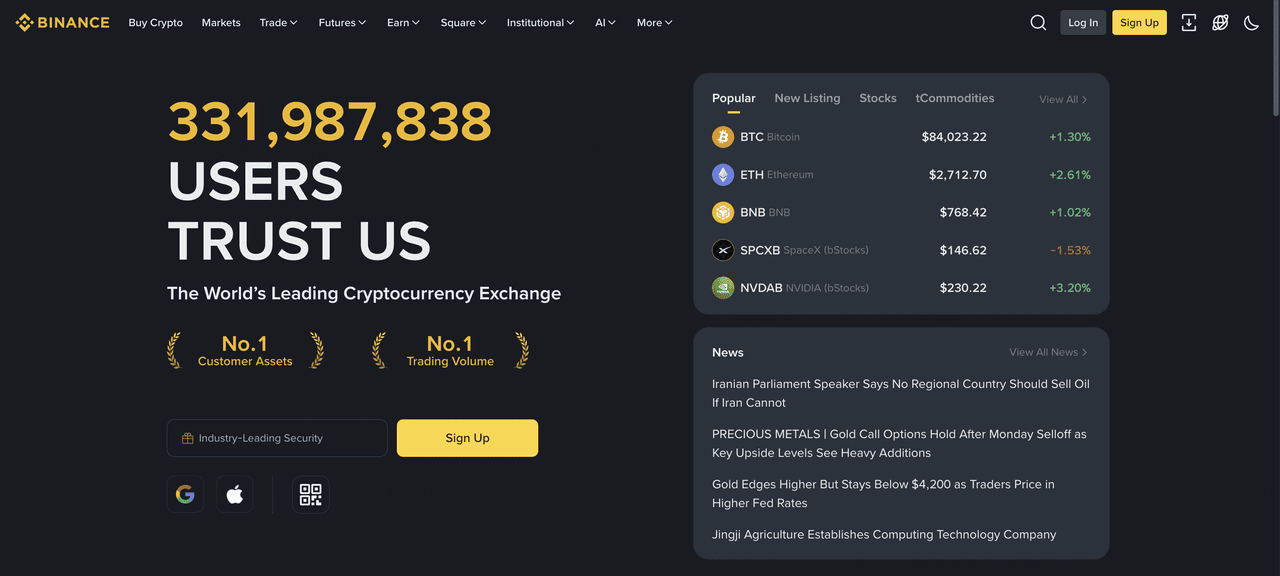
Binance offers access to more than 7,000 U.S. stocks and ETFs through external brokerage infrastructure, with fractional investments starting at $5. Eligible users can purchase shares using supported crypto balances, including USDT and USDC, and trade selected securities across 24/5 sessions. Binance charges no separate trading commission, but its promotional pricing includes a $0.17 minimum fee on smaller orders or a 0.05% spread-based charge on larger trades.
Binance may suit investors seeking broad U.S. stock selection and access to equities alongside crypto trading. However, its promotional spread-based charge is slightly higher than BingX's approximately 0.04% rate, while minimum fees can increase costs on smaller orders. Actual execution also depends on the stock, trading session, and market liquidity.
Read More: BingX vs. Binance 2026: Which Is Better for Spot and Futures Trading? Pros, Cons and Fees Compared
3. Coinbase
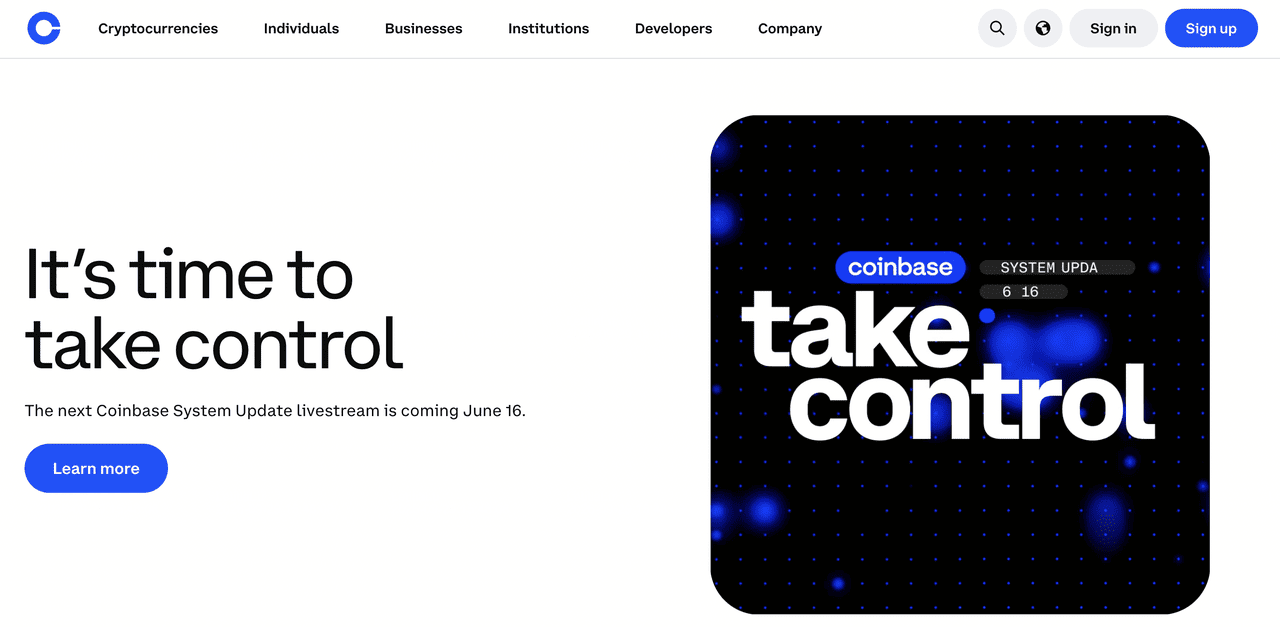
Coinbase offers U.S. stock trading through Coinbase Capital Markets, allowing eligible users to manage stocks and crypto within the same platform. Its brokerage service supports thousands of U.S.-listed securities, fractional investments starting at $1 for eligible stocks, and 24/5 trading for supported shares. Coinbase advertises zero-commission stock trading, with USD and USDC funding available subject to account requirements.
Coinbase may suit U.S. and eligible U.K. investors who prefer a combined stock and crypto trading experience. However, stock access remains restricted by residency and brokerage eligibility, with U.K. customers having a different selection from U.S. users. Investors should also consider market spreads, available trading sessions, and execution conditions when comparing costs with BingX.
Read More: BingX vs Coinbase 2026: Which Is Better for Spot and Futures Trading? Pros, Cons and Fees Compared
4. Kraken
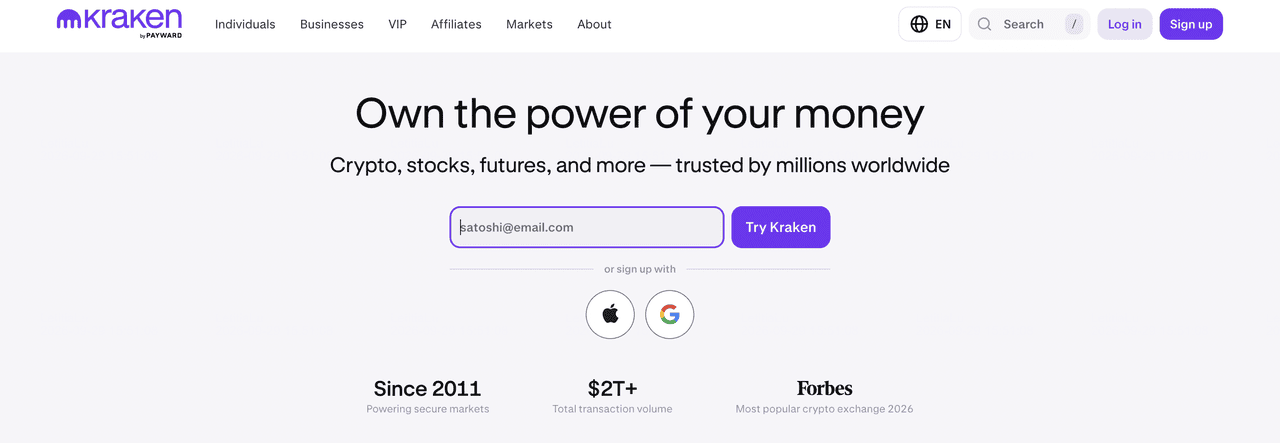
Kraken provides access to more than 11,000 U.S.-listed stocks and ETFs through its brokerage service. Eligible U.S. residents can trade stocks alongside cryptocurrencies, with zero-commission stock transactions and extended trading hours available through Kraken Pro. The platform also supports stock transfers from other brokers and offers trading tools for monitoring prices and managing orders.
Kraken may appeal to U.S.-based investors prioritizing broad stock selection, commission-free trading, and portfolio management within one platform. However, its brokerage stock service is limited to eligible U.S. residents, and regulatory or other applicable fees may still apply. Investors should evaluate available liquidity, bid-ask spreads, and trading-session conditions before placing larger orders.
Read More: BingX vs Binance vs Kraken: Which Exchange Is Better in 2026?
5. OKX
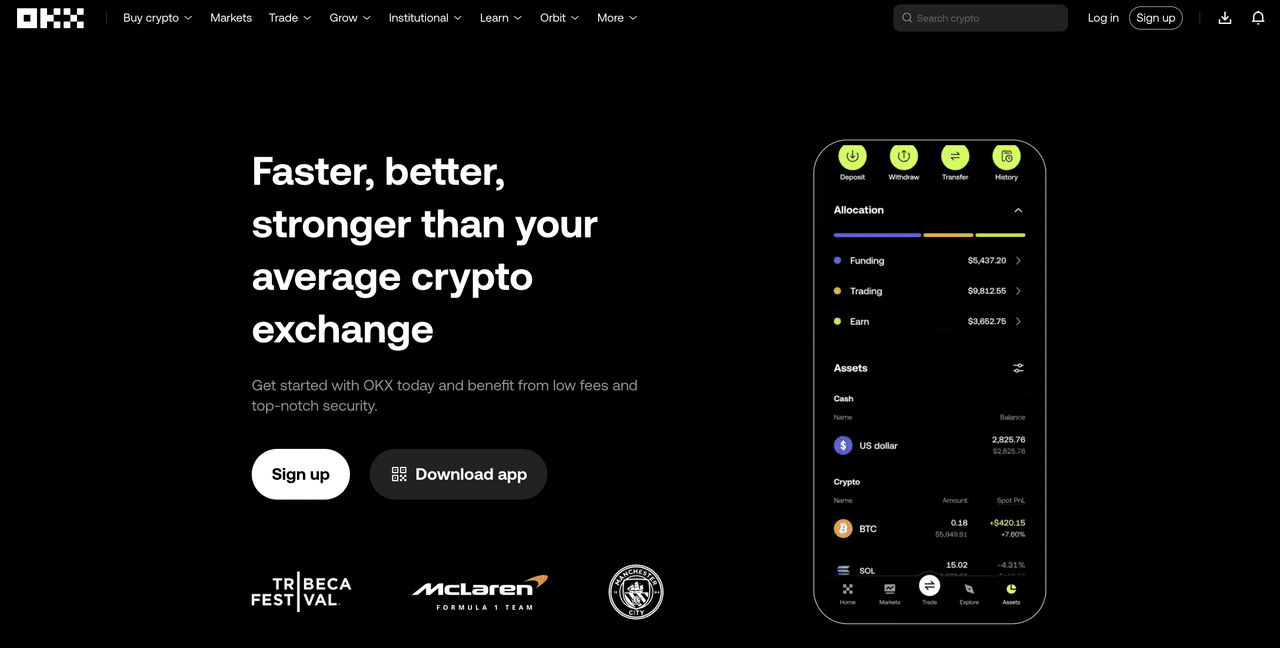
OKX operates a global trading platform offering crypto spot markets, futures, and advanced trading tools. Its services include live order-book information, technical charts, market and limit orders, and automated trading strategies. However, a comparable brokerage service for buying and holding actual U.S. stocks and ETFs could not be verified in its current published offerings.
OKX may suit active crypto traders who prioritize advanced execution tools and automated strategies. For investors specifically seeking U.S. stock ownership, BingX offers a clearer alternative through its brokerage partnership with Alpaca, providing access to more than 7,000 U.S. stocks and ETFs with stablecoin funding. Traders should compare product availability and account eligibility before choosing a platform.
Read More: BingX vs. OKX 2026: Which Is Better for Spot and Futures Trading? Pros, Cons and Fees Compared
6. Bybit
Bybit offers eligible users access to more than 1,000 U.S. stocks and ETFs through Alpaca's brokerage infrastructure, including major companies such as Apple, NVIDIA, and Tesla. Its stock trading service supports USDC funding, fractional shares for eligible securities, and 24/5 market access. Bybit charges no separate trading commission but applies a 0.10% service fee, with a minimum charge of $0.50 on orders below 500 USDC.
Bybit may suit traders seeking U.S. stock access alongside crypto trading and derivatives. However, its stock selection is narrower than BingX's 7,000+ securities, while its 0.10% service fee is higher than BingX's approximately 0.04% promotional spread-based charge. Investors should also consider market liquidity, execution prices, and regional availability when comparing platforms.
Read More: BingX vs. Bybit 2026: Which Is Better for Spot and Futures Trading? Pros, Cons and Fees Compared
5 Key Risks to Consider When Comparing U.S. Stock Trading Liquidity
U.S. stock trading platforms may offer broad market access and competitive fees, but liquidity and execution conditions vary across stocks, trading sessions, and market conditions. Even actively traded stocks can experience wider spreads and higher slippage during volatility, making it important to evaluate trading costs, market access, and platform reliability before placing an order.
- Monitor changes in market liquidity: Available buying and selling orders can change quickly, especially around earnings announcements, major news, or sudden price movements. Lower liquidity can lead to wider spreads and greater slippage, particularly for larger orders.
- Compare liquidity across stocks and trading hours: Highly traded stocks such as Apple and NVIDIA generally have stronger liquidity than smaller companies, but trading conditions vary by session. Overnight and extended-hours trading may have fewer participants, wider spreads, and less favorable execution prices.
- Review total trading costs: Commission-free stock trading does not always mean zero trading costs. Spread-based charges, bid-ask spreads, slippage, currency conversion fees, and applicable regulatory charges can affect the final execution cost, especially for frequent or larger trades.
- Check platform security and asset custody: Review account protection features, brokerage arrangements, custody services, and withdrawal procedures. Understanding how securities are held and protected can help traders assess platform reliability beyond advertised trading fees.
- Verify regional availability and settlement rules: Supported stocks, trading hours, funding methods, and account requirements may differ by jurisdiction. Check regional eligibility, applicable settlement periods, and fund withdrawal conditions before trading.
Conclusion: Why BingX Is a Strong U.S. Stock Trading Platform for Liquidity
Each U.S. stock trading platform offers different strengths in liquidity, trading fees, stock selection, and market access. While popular U.S. stocks and ETFs generally have strong liquidity, execution costs can vary across securities, trading sessions, and order sizes. Choosing the right platform means comparing bid-ask spreads, trading costs, and available features rather than relying on commission rates alone.
BingX combines access to 7,000+ U.S. stocks and ETFs through Alpaca, USDT and USDC funding, fractional shares starting from 5 USDC, and 24/5 trading access. With no separate trading commission and an approximately 0.04% promotional spread-based charge, BingX offers a competitive way to access U.S. stocks alongside crypto markets. For eligible traders seeking broad stock selection and flexible funding, BingX provides a connected trading ecosystem while allowing users to evaluate liquidity and execution costs before placing orders.
Risk Reminder: U.S. stock and ETF trading involves market volatility, slippage, and potential losses. Liquidity may decline and spreads may widen outside regular market hours or during major market events. Limit orders may remain unfilled, and trading fees, settlement requirements, and product availability depend on regional eligibility.
Related Reading
- What Is BingX Stocks Trading? A Beginner's Guide to Trading U.S. Stocks and ETFs With Crypto
- How Does Liquidity Affect Trading Costs? Trade With Lower Costs on BingX
- What Is Liquidity in TradFi Trading and How Does It Work on BingX?
- What Is a Multi-Asset Trading Platform? A Guide to Trading Crypto and TradFi on BingX
- How to Buy U.S. Stocks on BingX With USDT or USDC: A Beginner's Guide
- Top 7 U.S. Stocks to Watch in 2026 and How to Buy on BingX
- Top 8 U.S. ETFs to Invest for Beginners in 2026 and How to Buy on BingX
FAQs About U.S. Stock Trading Liquidity
1. Which Platform Offers the Best Liquidity for U.S. Stock Trading?
The best platform depends on the stock, order size, and trading session. BingX provides access to 7,000+ U.S. stocks and ETFs through Alpaca, with competitive trading costs and 24/5 access. Traders should compare live bid-ask spreads, available liquidity, and execution costs before placing orders.
2. Can I Buy U.S. Stocks With USDT or USDC on BingX?
Yes. Eligible users can buy U.S. stocks and ETFs through BingX Stocks Trading using USDT or USDC, with fractional investments starting from 5 USDC. Stock availability, account requirements, and regional restrictions apply.
3. Do I Own the U.S. Stocks I Buy on BingX?
BingX Stocks Trading provides access to actual U.S. shares and ETFs through Alpaca Securities LLC, which handles brokerage execution, clearing, settlement, and custody. Securities are held through the brokerage arrangement, subject to applicable account terms and ownership rights.
4. Are U.S. Stocks Liquid Outside Regular Market Hours?
Some U.S. stocks are available during extended and overnight trading sessions, but liquidity may be lower and bid-ask spreads wider than during regular market hours. BingX supports 24/5 trading for eligible securities, although execution conditions vary by stock and session.
5. Does Commission-Free Stock Trading Mean Zero Trading Costs?
No. Commission-free trading may still involve spread-based charges, market spreads, slippage, or other applicable fees. BingX charges no separate trading commission but applies an approximately 0.04% promotional spread-based charge through December 31, 2026. Traders should review the estimated execution price before confirming an order.
6. How Can I Reduce Slippage When Trading U.S. Stocks?
To reduce slippage, compare bid-ask spreads, trade during sessions with sufficient liquidity, and choose appropriate order sizes. Limit orders allow traders to set an acceptable buying or selling price, although execution is not guaranteed.
