
Hyperliquid (HYPE) is a decentralized perpetual exchange (Perp DEX) built on its own custom Layer 1 blockchain. Designed for high-speed, gas-free trading, it executes all orders on-chain, offering DeFi transparency with centralized exchange performance.
Unlike DEXs on Ethereum or Layer 2s, Hyperliquid's custom chain is optimized for low latency, scalability, and smooth user experience. Traders benefit from zero gas fees, native on-chain matching, and a vibrant trading community that makes it one of the most active platforms in on-chain derivatives.The project recently gained major attention after announcing a $1 billion HYPE airdrop, drawing comparisons to Solana's breakout phase.
This article covers how Hyperliquid works, key features of the HYPE token, and why it's viewed as a leading contender in the next wave of on-chain derivatives trading.
Read More: What Are the Top DeFi Perpetual Protocols (Perp DEX) to Know in 2025?
What Is Hyperliquid (HYPE) Perp DEX and How Does It Work?
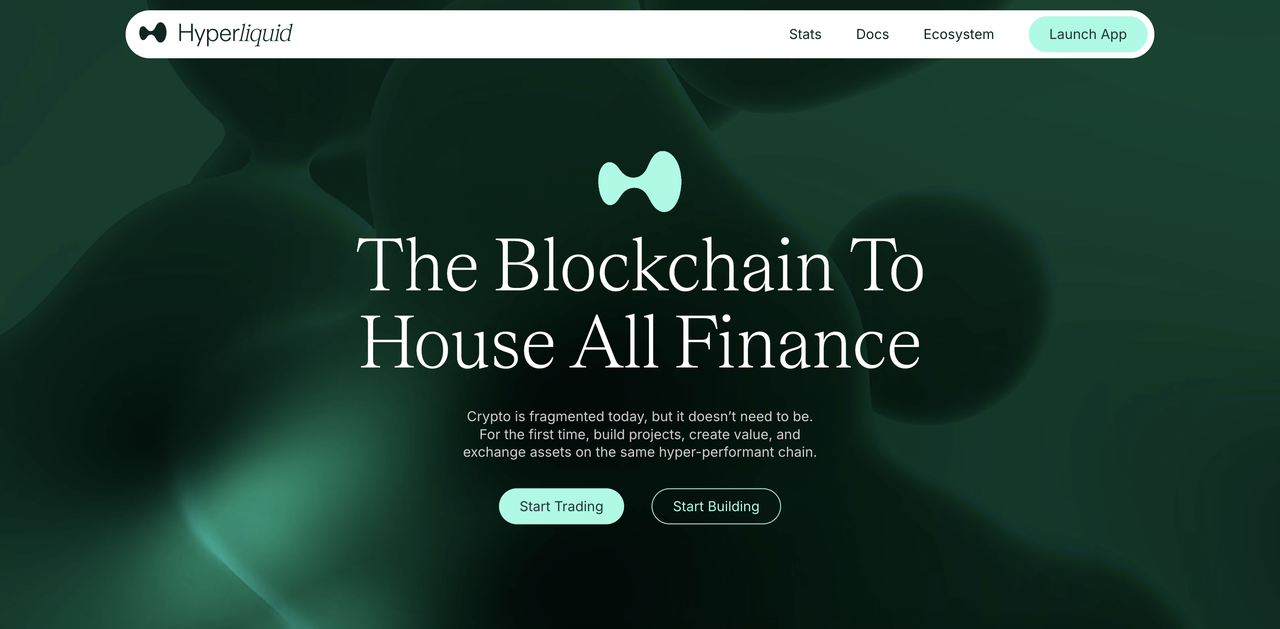
Hyperliquid is a high-performance decentralized exchange (DEX) built specifically for perpetual futures trading. Unlike most DEXs that run on Ethereum Layer 2s or other general-purpose blockchains, Hyperliquid operates on its own custom Layer 1 blockchain, purpose-built to support a fully on-chain trading ecosystem.
The Hyperliquid Chain is optimized for speed, transparency, and scalability, allowing for real-time execution, a fully on-chain order book, and gas-free trading within a single unified system. By combining deep liquidity, advanced trading tools, and user-friendly interfaces, Hyperliquid delivers centralized-exchange-level performance while maintaining the security and self-custody of decentralized finance (DeFi).
What Makes Hyperliquid So Special?
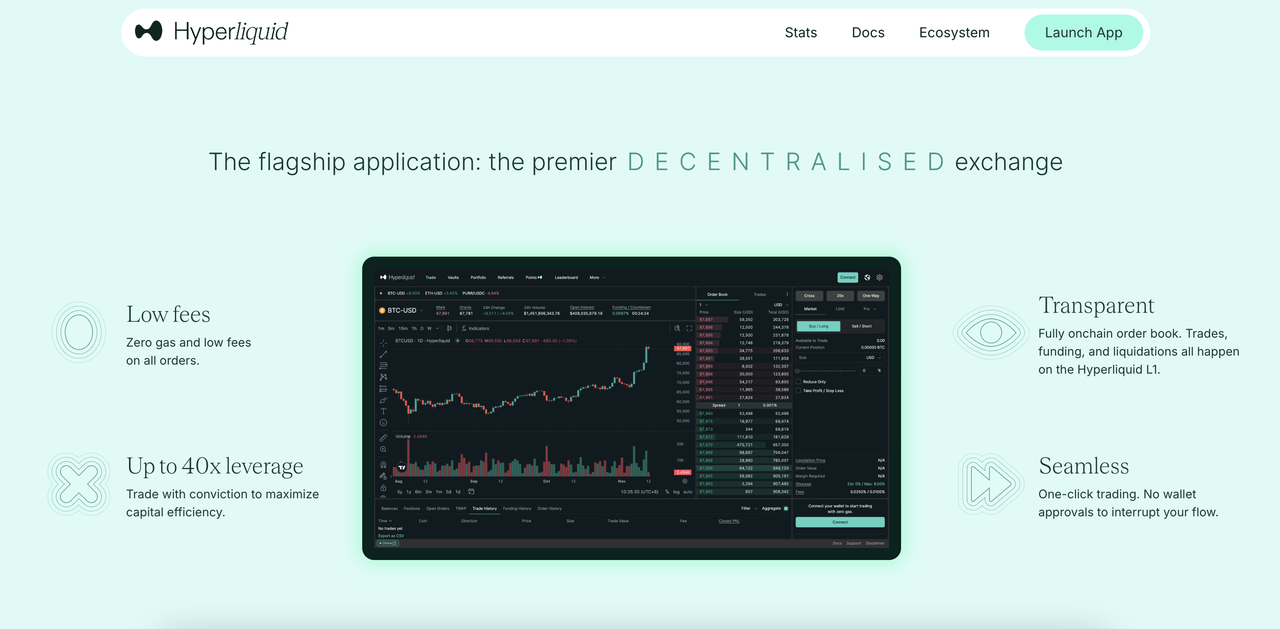
Hyperliquid is a perpetual DEX built on its own custom blockchain, designed to deliver the speed and efficiency of centralized exchanges while keeping everything fully transparent and on-chain. Unlike most decentralized platforms that rely on general-purpose blockchains, Hyperliquid was developed specifically for real-time trading.
1. Custom Layer 1 Blockchain Build for Highspeed: Hyperliquid's blockchain is engineered for performance, capable of processing over 200,000 orders per second with near-instant trade confirmation. This ensures smooth execution even during periods of high volatility.
2. Fully On-Chain Order Book: Instead of using automated market makers (AMM), Hyperliquid runs a fully on-chain order book for tighter spreads, accurate pricing, and full transparency. Trades incur no gas fees, only low maker fees of 0.01% and taker fees of 0.035%. The platform supports over 130 perpetual markets, including niche and early-stage tokens.
3. Seamless Trading Experience: Users can trade with one click using a wallet or email login. The platform supports up to 50x leverage, both cross- and isolated-margin, and advanced order types like limit, TWAP, and scale.
4. Transparent and Community-Owned: Trading is non-custodial with no KYC. Fees go back to users through vaults and the HYPE ecosystem. With no VC funding, Hyperliquid stays aligned with its community from day one.
Instead of sending fees to investors or a central entity, Hyperliquid redistributes value to users through vaults and the HYPE ecosystem. With no venture capital funding, the platform remains fully aligned with its community.
Why Is the Hyperliquid DEX Gaining Traction in 2026?
1. Hyperliquid Continues to Be a Top 10 DEX Chain by Daily Volume in 2026
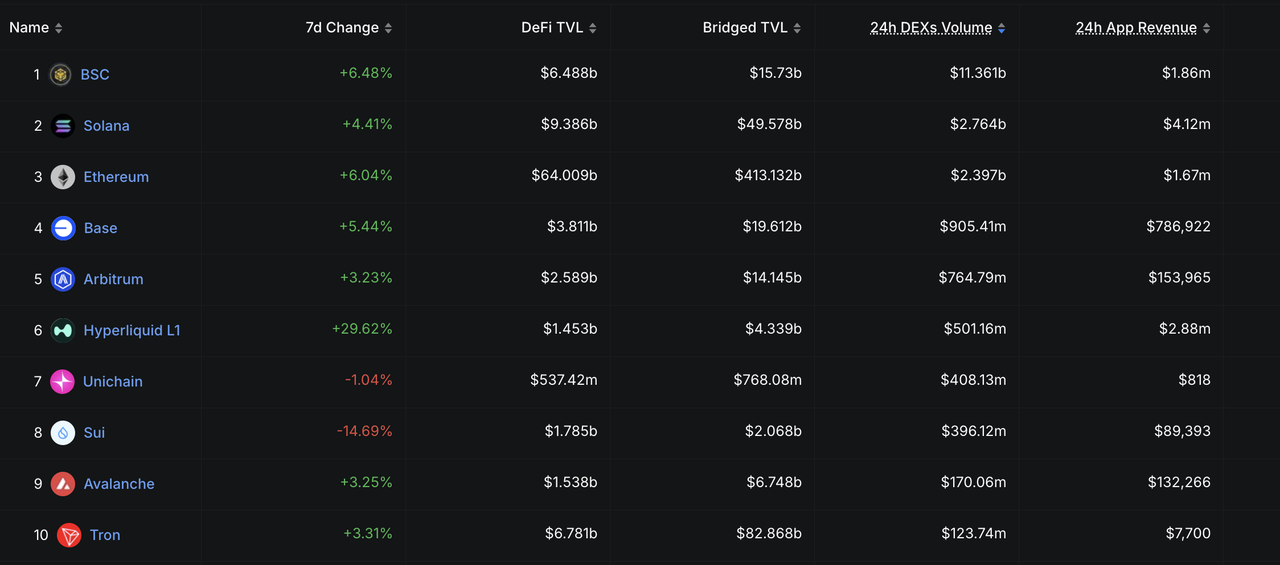
Hyperliquid's rapid rise in 2025 is driven by surging trading activity, viral whale engagement, and strong on-chain performance. In May 2025, it became one of the top six DEX chains by daily volume, recording over $501 million in a single day and surpassing competitors such as Sui, Tron, and Avalanche. Beyond daily trading, Hyperliquid ranked 6th in total crypto fee revenue for the week, generating $21.6 million and outperforming major platforms like Lido, Jito, and Tron. Its all-time trading volume has exceeded $1.5 trillion, underscoring both user growth and long-term retention.
Hyperliquid's rapid ascent as a high-performance L1 chain continues into 2026, solidifying its position among the leading DEX ecosystems by trading activity. As of early March 2026, Hyperliquid consistently ranks in the top tiers of DEX chains by daily volume, often in the top 5-10 across aggregated spot and perpetual metrics on platforms like DefiLlama, with 24-hour DEX volumes frequently in the $200-300 million range capturing notable blockchain dominance shares like 2–3% in certain snapshots. This places it ahead of or competitive with chains like Sui, Avalanche, and others in combined DEX activity, driven primarily by its dominance in perpetual futures.
2. Hyperliquid Is the Largest On-Chain Perpetual DEX by Market Share
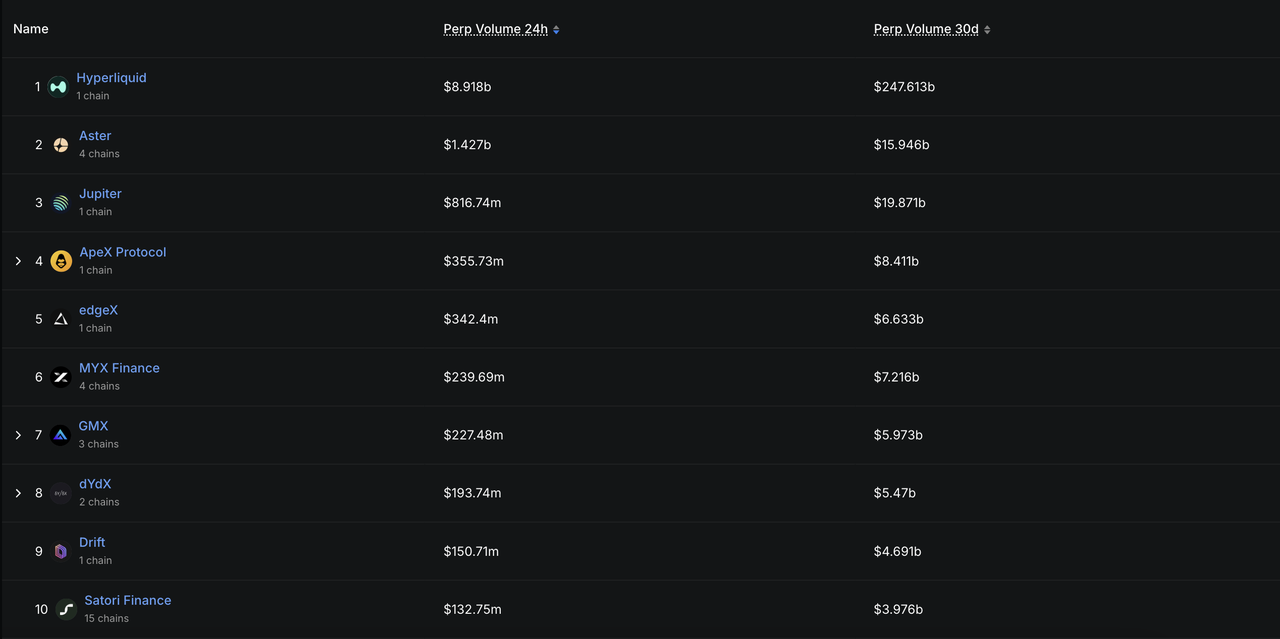
Hyperliquid continues to dominate the on-chain (decentralized) perpetual futures market as of March 2026, commanding over 70% of open interest in decentralized perps as per Artemis. This dominance stems from its custom Layer 1 blockchain, purpose-built to deliver gas-free, high-speed, fully on-chain order execution. The platform's design enables scalability and transparency that set it apart from DEXs built on Ethereum or Layer 2 networks.
3. James Wynn's Whale Trades Ignite Viral Growth and Record Fees
Much of Hyperliquid's momentum came from crypto whale James Wynn, whose leveraged trades went viral across social media. Screenshots of his multi-million-dollar long positions sparked widespread interest and drove new traders to test the platform's speed and reliability. Within one week, Hyperliquid generated over $55M in trading fees in 2025. Wynn's activity became a catalyst for community expansion, showing how social proof and trader confidence can accelerate DeFi adoption.
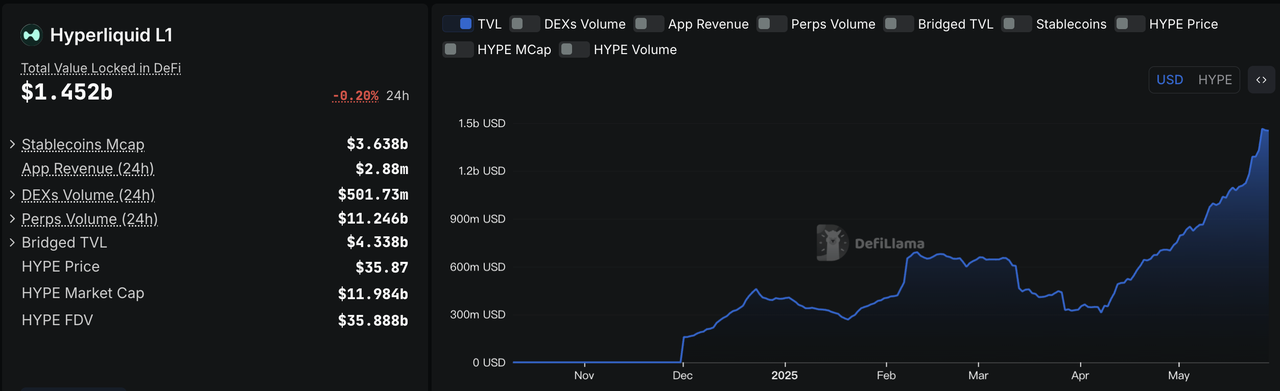
4. HYPE Token Hits All-Time High as Perpetual DEX Momentum Grows
As of March 2026, Hyperliquid's native token HYPE trades around $34-$35, with a market cap of approximately $8-9 billion and a circulating supply roughly 257 million tokens, per CoinMarketCap. It previously reached an all-time high of $59.39 in September 2025, before pulling back and stabilizing in the mid-$30s amid broader market fluctuations.
The surge aligns with the broader boom in perpetual DEXs, which have become DeFi's fastest-growing sector. According to CoinGecko, the on-chain derivatives market cap jumped 654% in 2025 to $18.9 billion, with perpetuals accounting for over $17.9 billion. Platforms like MYX and Aster are also driving this growth, showing traders' accelerating shift from centralized exchanges to on-chain, gas-free trading environments led by Hyperliquid.
Read More: Hyperliquid (HYPE) Price Prediction (2025): A Complete Guide to Its Tokenomics and Future Forecast
$HYPE Tokenomics Overview
HYPE is the native token of the Hyperliquid ecosystem, powering governance, staking, and trading rewards. Holders can vote on protocol proposals, stake to earn up to 55% annual yield, and use HYPE to pay trading fees for additional benefits. The token supports a user-owned model where platform revenue is redistributed to the community through buybacks, rewards, and burns.
HYPE has a fixed supply of 1B tokens, with allocations for early users, staking, contributors, and community growth. Over 110,000 tokens have already been burned, and contributor allocations unlock gradually to align long-term incentives.
HYPE Token Utilities
• Fee rewards: 97% of trading fees buy back or redistribute HYPE.
• Staking: Earn up to 55% yield while reducing circulating supply.
• Trading benefits: Lower fees and volume-based incentives for holders.
• Governance: Vote on protocol upgrades and reward policies.
• No VC allocation: 100% user-driven ownership and distribution.
HYPE fuels Hyperliquid's on-chain economy by directly linking token demand to trading activity and community participation, reinforcing long-term value creation across the ecosystem.
HYPE Token Allocation
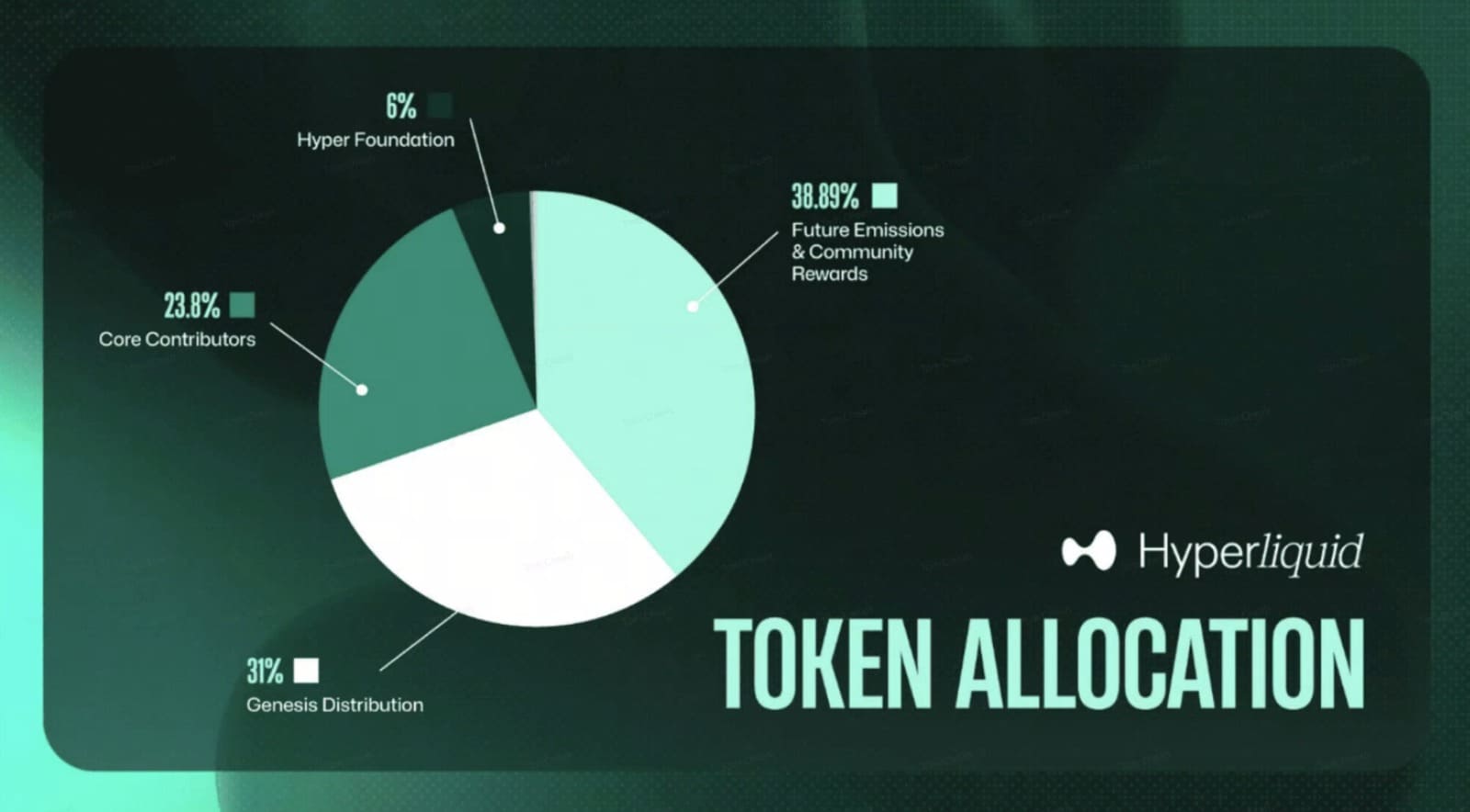
• 38.89% for future emissions and community rewards
• 31.00% distributed at genesis (Nov 29, 2024)
• 23.80% to current and future core contributors
• 6.00% for the Hyper Foundation budget
• 0.30% for community grants
• 0.012% via HIP-2 governance proposal
97% of trading fees are used to buy back, redistribute, or burn HYPE. More than 110,000 tokens have already been burned, reinforcing long-term utility and transparency.
What Is USDH, the Stablecoin Issued by Hyperliquid?
USDH is the native dollar-pegged stablecoin of the Hyperliquid ecosystem, launched in September 2025 and issued by Native Markets after a governance vote. Fully backed 1:1 by fiat or U.S. Treasury-equivalent reserves, USDH serves as the main settlement and liquidity asset on Hyperliquid's Layer 1 chain. Its design keeps yield and liquidity within the ecosystem instead of flowing to external stablecoins like USDC, strengthening Hyperliquid's on-chain economy. By integrating USDH, the platform reduces dependency on third-party assets, improves capital efficiency, and aligns stablecoin utility directly with user activity and token value.
Read More: What Is USDH, Hyperliquid's New Stablecoin Issued by Native Markets?
When Is the Hyperliquid Airdrop?
The main HYPE airdrop took place on December 2, 2024, following the token launch. Eligible users claimed rewards through the Hyperliquid app. Season 1 has ended, but future community-governed drops may continue rewarding active traders.
What Is the HYPE Airdrop, and Why Does It Matter?
The launch of the HYPE token marked a turning point not just for Hyperliquid but for token distribution strategies across the DeFi space. It wasn't just big; it was one of the largest and most community-driven airdrops in crypto history.
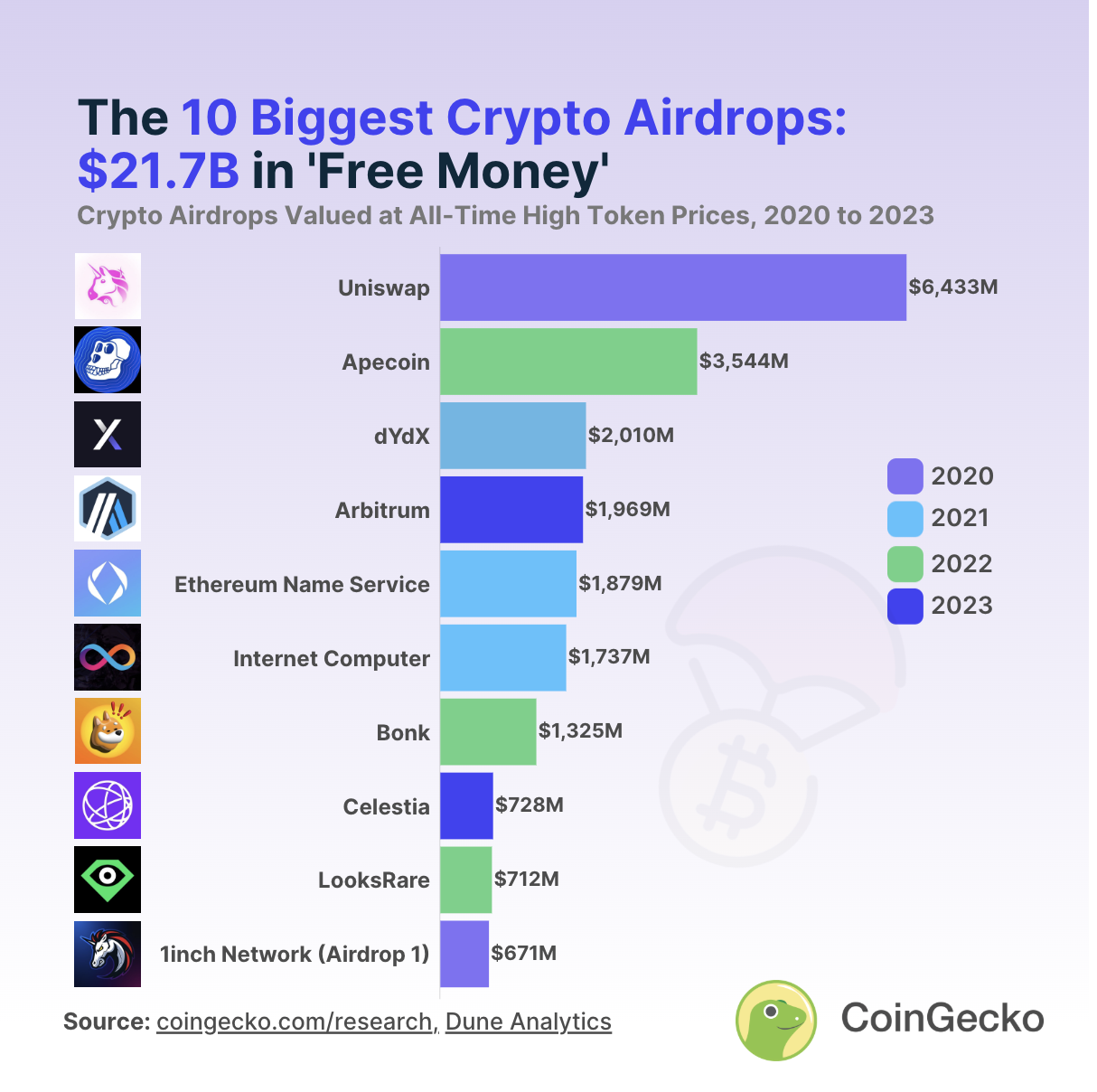
1. $1.6B HYPE Airdrop Becomes the 7th Largest in DeFi History
In December 2024, Hyperliquid distributed 310 million HYPE tokens, or 31% of its total supply, to over 94,000 eligible users. At launch, HYPE was priced at $3.90, valuing the airdrop at over $1.6 billion. Within 12 hours, the token jumped to $6.16 and later peaked at $14.99. This performance showed real market belief in Hyperliquid's design and long-term vision. This also makes HYPE the 7th largest crypto airdrops in history.
2. 100% Community Allocation Sets a New Benchmark for Fair Launches
What made this airdrop stand out was its full commitment to the community. There were no allocations for venture capital firms, market makers, or insiders. No lockups or special deals. Every token went to users who had engaged with the platform.
3. Hyperliquid Proves That User-First Distribution Builds Real, Sustainable Value
The impact of the Hyperliquid airdrop went far beyond price:
• Community Formation: Nearly 100,000 users became direct stakeholders.
• Liquidity Bootstrapping: Tokens landed with real users, not private investors.
• Decentralized Ownership: Broad distribution kept control of the community.
• Ecosystem Signal: The success showed that user-first launches can outperform VC-backed models in traction and trust.
Arthur Hayes Predicts $150 Target for $HYPE: Will Hyperliquid's Trading Surge Deliver in 2026?
Arthur Hayes, the BitMEX co-founder and influential crypto commentator, has set a bullish $150 target for Hyperliquid's native token, HYPE by August 2026 in his recent Substack essay "Hype Man." This implies roughly a 5x gain driven by Hyperliquid's resilient DEX model in sideways or weak markets similar to how GMX thrived in 2023 by accruing trading fees regardless of spot price direction.
Hayes highlights Hyperliquid's revenue-sharing mechanism: ~97% of protocol fees go toward buying back and burning HYPE tokens, creating deflationary pressure and direct price support as trading volume grows. He argues this could shine if on-chain trading (especially perpetuals) captures more market share from centralized exchanges (CEXes), with annualized revenue needing to climb toward ~$1.4 billion (a prior peak level) to justify the valuation at a higher earnings multiple (ex., relating from ~12x to ~25x).
A major growth catalyst is HIP-3, the permissionless perpetual markets feature allowing users to launch on-chain derivatives for assets like Nasdaq-100 indices or precious metals (requiring a 500,000 HYPE stake). Despite being relatively new, HIP-3 already drives ~10% of revenue, and surges in tokenized and commodity trading (ex., oil/gold perpetuals amid geopolitical volatility) have pushed daily open interest past $1 billion+ recently, boosting fees significantly. While achievable if Hyperliquid sustains momentum via features like upcoming Portfolio Margin alpha, record volumes (ex., $10B+ in 24h perps at times), and macro hedging demand, risks include competition, unlocks (ex., recent core contributor releases adding supply pressure), broader crypto weakness, and the need for sustained revenue scaling.
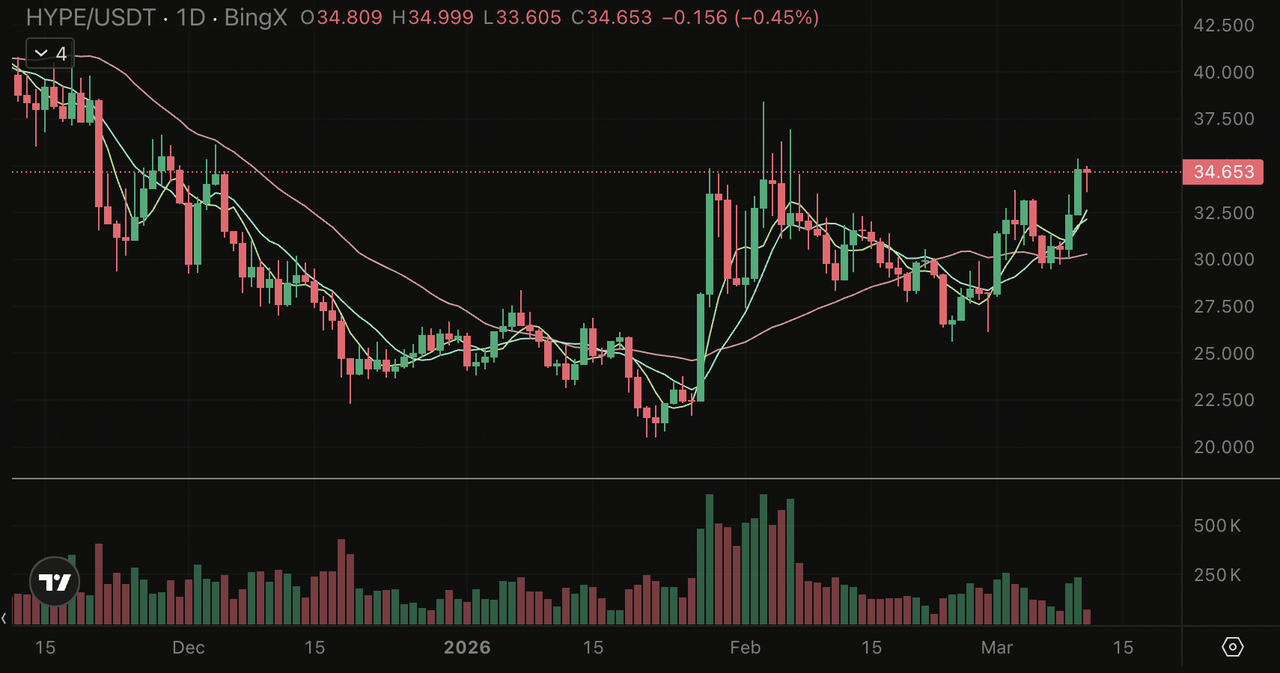
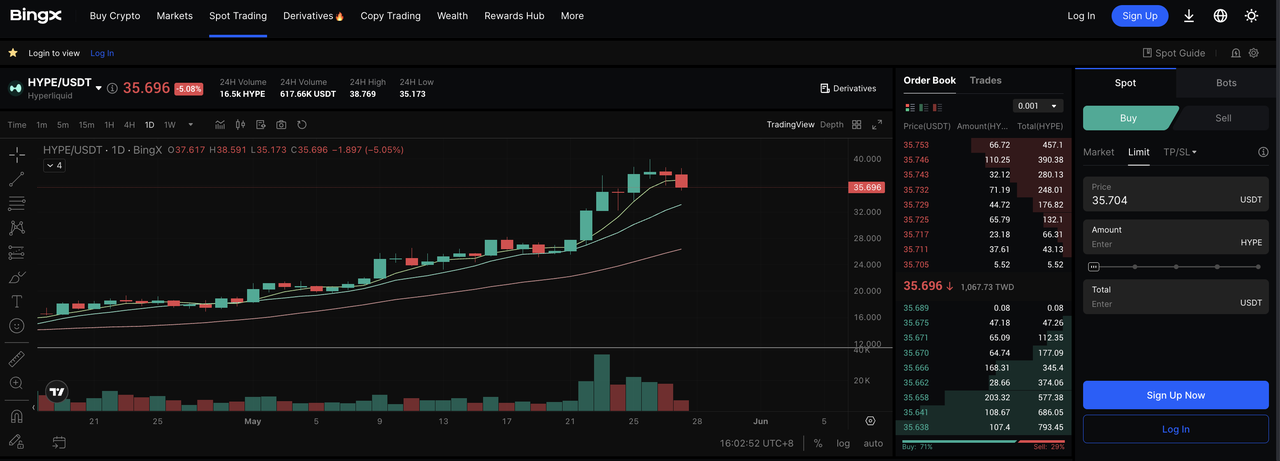
Source: HYPE/USDT on BingX
As for price action this week (roughly March 4-10, 2026, leading into March 10/11): $HYPE showed strong recovery and upside momentum. It traded in the low-to-mid $30s early in the week (ex., around $30-$32 on March 4-6 amid some unlock-related pressure), then surged notably climbing double-digits in spots (ex., 13-20% rallies tied to commodity perp demand and Hayes' prediction buzz). By March 9-10, it pushed toward highs near $35.14-$35.33, closing the period around $34-$34.70 (up ~10-13% over 7 days per trackers like CoinGecko). This outperformed the broader market in places, fueled by HIP-3 open interest records (~$1.26B), elevated volumes ($300M+ 24h), and renewed attention from Hayes' forecast.
How to Buy Hyperliquid (HYPE) on BingX?
If you're looking to add HYPE, the native token of Hyperliquid, to your portfolio, BingX makes the process simple and accessible. With a beginner-friendly interface, multiple funding options, and robust trading features, BingX is a reliable platform for acquiring and managing HYPE.
Here's how to get started in five straightforward steps:
1. Create a BingX Account: Sign up on BingX with your email and set a secure password. It only takes a few minutes.
2. Secure Your Profile: Verify your email, set up two-factor authentication, and complete KYC if needed for full access.
3. Add Funds: Deposit USDT or other supported crypto. You can also buy crypto directly on BingX with a bank card or local payment method.
4. Buy HYPE: Go to the spot market, search for HYPE/USDT, and place a market or limit order using your funds.
5. Hold or Trade: After buying, you can hold HYPE on BingX or use trading tools available on the platform.
How to Store HYPE Securely on BingX or in Self-Custody
After purchasing HYPE, you can hold it directly on BingX for quick access to trading tools, portfolio tracking, and advanced features. BingX uses a combination of cold and hot wallet systems, third-party audits, and full Proof of Reserves to safeguard your holdings with institutional-grade security.
If you prefer managing your assets independently, you can transfer HYPE to a self-custody wallet that supports EVM-based tokens. Since HYPE is issued on the Hyperliquid blockchain with EVM compatibility, wallets like MetaMask, Rabby, and Trust Wallet are suitable options. Always double-check the token contract and ensure you are sending it to the correct chain. For long-term security, consider using a hardware wallet like Ledger or Trezor and always back up your recovery phrase in a secure, offline location.
Final Thoughts: Should You Buy Hyperliquid (HYPE) in 2026?
Hyperliquid is quickly becoming one of the most innovative platforms in decentralized finance. With its high-speed trading engine, fully on-chain order book, and gas-free experience, it redefines what users can expect from a DEX. But beyond raw performance, its real edge lies in a community-first approach.
The launch of the HYPE token was more than just a distribution. With no private investors or insider allocations, and one of the largest airdrops in DeFi history, Hyperliquid built a foundation rooted in user ownership. That same ethos drives the platform today, with HYPE supporting governance, rewards, and a value system designed around its community.
As crypto space evolves, Hyperliquid offers a clear example of what next-generation finance can look like. For traders, builders, and curious newcomers alike, it's a platform built not just for growth, but for participation.
Related Reading
1. What Are the Top DeFi Perpetual Protocols (Perp DEX) to Know in 2025?
2. Hyperliquid (HYPE) Price Prediction (2025): A Complete Guide to Its Tokenomics and Future Forecast
3. What Is a Spot Hyperliquid (HYPE) ETF and When Will It Launch?
4. Aster vs. Hyperliquid: Which One Will Lead the Perpertual DEX Market in 2025?
5. What Is Aster Perpetual DEX and How Does It Work?
6. What Is USDH, Hyperliquid's New Stablecoin Issued by Native Markets?
7. What Are the Top 10 Decentralized Exchanges (DEXs) of 2025?
FAQs on Hyperliquid (HYPE) DEX
1. When was the Hyperliquid airdrop?
The main Hyperliquid airdrop took place on December 2, 2024, distributing 310 million HYPE tokens worth over $1.6 billion to more than 94,000 eligible users.
2. How can I earn rewards for Hyperliquid?
Users can stake HYPE to earn up to 55% annual yield, participate in governance, and receive trading rewards based on activity and volume.
3. Does Hyperliquid charge gas fees?
No. Hyperliquid runs on its own Layer 1 blockchain, offering gas-free trading and real-time on-chain order execution.
4. Is Hyperliquid better than Solana?
Hyperliquid is not a general-purpose Layer 1 like Solana, but is purpose-built for decentralized trading. It provides faster on-chain order execution, gas-free transactions, and deep liquidity, giving it an advantage in perpetual DEX performance.
5. Who is behind Hyperliquid?
Hyperliquid was founded by Jeff Yan and iliensinc, both Harvard alumni, along with a team of engineers from MIT, Caltech, and leading trading firms. The project is self-funded and has no venture capital backing.
6. Will there be more Hyperliquid airdrops?
Season 1 of the HYPE airdrop has ended, but around 38% of the total supply is reserved for future emissions and community rewards. While a second airdrop has not been officially confirmed, additional distribution rounds are likely to occur under community governance.