

For decades, traditional stocks traded through brokerages and stock exchanges have been the standard way investors gain exposure to public companies. In 2026, however, a parallel model is emerging: tokenized stocks, which represent equity exposure through blockchain-based tokens. The sector has expanded rapidly, with total tokenized equity value rising from under $100 million in mid-2025 to nearly $1 billion by early 2026, while monthly trading volume has reached about $1.8 billion according to RWA.xyz.
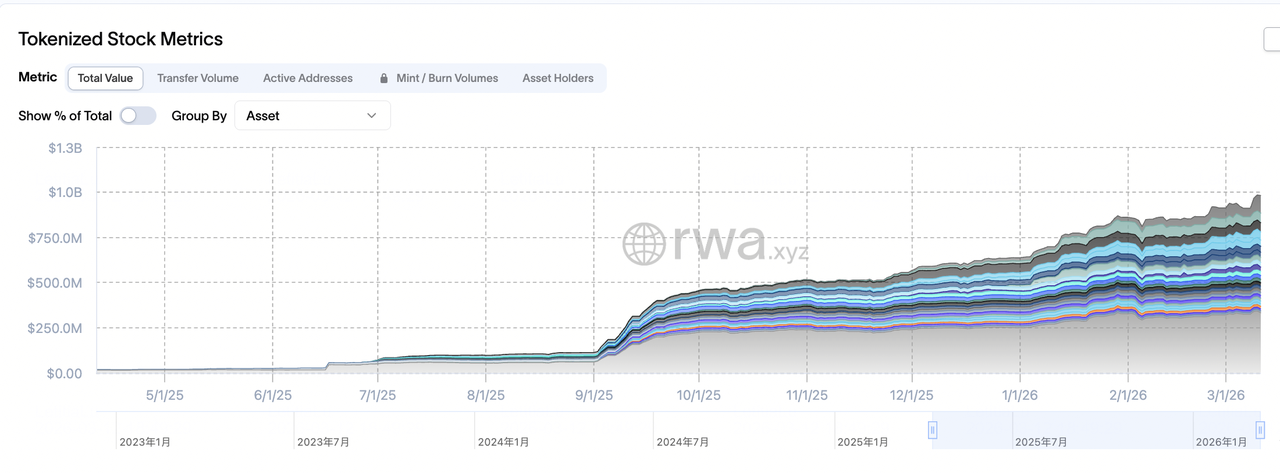
Source: RWA.xyz
At the same time, regulatory momentum is accelerating. New guidance from the U.S. Securities and Exchange Commission and a proposal by Nasdaq to support tokenized equities on a major U.S. exchange are pushing the discussion of tokenized stocks vs traditional stocks into the financial mainstream.
But what exactly is a tokenized stock, and how does it compare to the traditional shares you might already hold in a brokerage account? This guide explains both instruments, compares trading hours, ownership rights, fees, accessibility, and regulation, and helps you decide which approach may fit your financial goals in 2026.
What Is a Traditional Stock and How Does It Work?
Source: RBC Global Asset Management
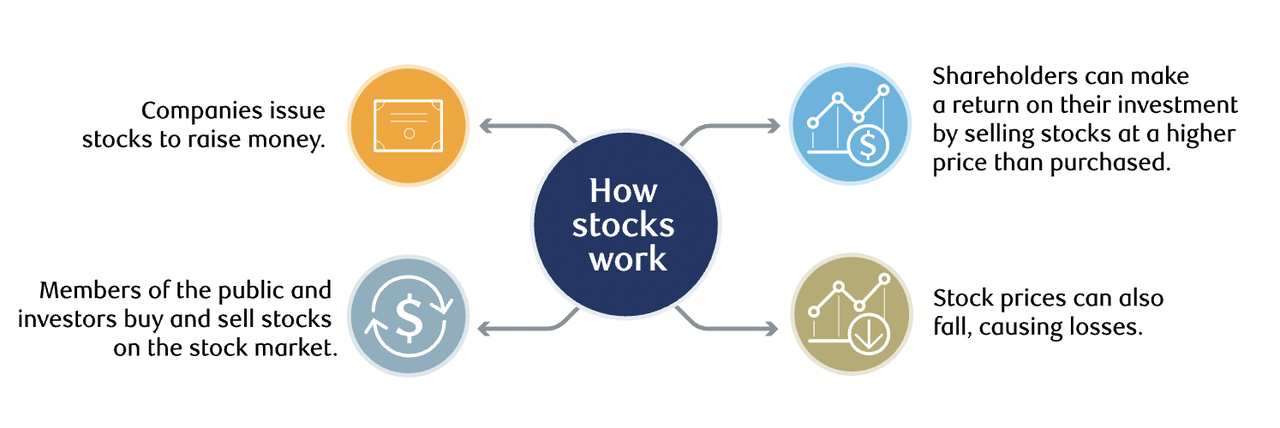
A traditional stock, also known as a share or equity, represents fractional ownership in a publicly listed company. Investors buy these shares through licensed brokers or stock exchanges such as the New York Stock Exchange (NYSE) and Nasdaq, which together host the majority of global equity trading by market capitalization. Globally, stock markets allow companies to raise capital from investors while providing individuals and institutions a way to participate in corporate growth.
As shareholders, investors receive several legally enforceable rights. These include voting on corporate decisions, receiving dividends when profits are distributed, and claims on company assets in the event of liquidation. Traditional stock markets operate during fixed trading hours, typically about 6.5 hours per weekday in the United States, with trades settling under the standard T+1 cycle, meaning final ownership transfer occurs one business day after the transaction.
What Is a Tokenized Stock and How Does It Work?
In 2026, tokenized stocks generally appear in three structural models:
- Custodial (Wrapped) Tokens - the most common structure today: A regulated intermediary holds the underlying shares and issues blockchain tokens backed 1:1 by those equities. Investors gain economic exposure to the stock while relying on the custodian to maintain the backing. Examples include tokenized equities from Backed Finance’s xStocks ecosystem and real-world asset (RWA) platforms such as Ondo Finance.
- Issuer-Sponsored Tokenized Securities: The issuing company integrates blockchain records directly into its shareholder registry, allowing tokens to represent direct legal ownership of equity. This model is still rare and largely experimental but is viewed by the U.S. Securities and Exchange Commission as the structure that provides true shareholder rights.
- Synthetic Tokens: These tokens track the price of a stock without holding the underlying shares. They provide price exposure only and typically do not include voting rights, dividends, or ownership claims. Early examples came from protocols such as Mirror Protocol.
Tokenized Stocks vs. Traditional Stocks: What Are The Key Differences
1. Trading Hours
- Traditional stock markets operate on fixed exchange schedules tied to their home exchange. The New York Stock Exchange and Nasdaq, for example, run from 9:30 AM to 4:00 PM Eastern Time on weekdays and close on weekends and public holidays. If major news breaks outside those hours, investors must wait for the next market opening to react.
- Tokenized stocks trade 24 hours a day, seven days a week on blockchain networks. Whether it is midnight in Taipei or Sunday afternoon in London, investors can buy or sell tokenized equities in real time. This continuous trading window is one of the most frequently cited advantages of tokenized markets, particularly for investors outside major financial centers.
2. Settlement Speed
- Traditional stock trades in the United States settle on a T+1 basis (reduced from T+2 in 2024), meaning final ownership transfers one business day after execution. Although faster than earlier systems, this still leaves a short window of counterparty risk before settlement completes.
- Tokenized stocks use blockchain infrastructure to enable near-instant settlement. Transactions settle atomically through smart contracts, where payment and asset transfer occur simultaneously. This significantly reduces settlement delays and can improve capital efficiency for active traders and institutions.
3. Fractional Ownership
- Traditional stocks are issued and recorded in whole shares, meaning the underlying market infrastructure operates on a one-share minimum unit. While many modern brokerages offer fractional-share trading, this feature is implemented at the broker level rather than within the core exchange system.
- Tokenized stocks support native fractional ownership. Because blockchain tokens are highly divisible, they can be split into 0.001, 0.0001, or even smaller units, allowing investors to purchase small fractions of a share directly on-chain and lowering the capital barrier to accessing high-value equities.
4. Geographic Accessibility
- Traditional stock markets are subject to jurisdictional restrictions. Investors often need a licensed brokerage account and may face currency conversion costs or regulatory limits when accessing foreign equities.
- Tokenized stocks can often be accessed globally with only an internet connection. Investors in regions without easy brokerage access can gain exposure to major U.S. or European equities through blockchain platforms.
5. Fees and Intermediaries
- Traditional stock trading involves several intermediaries including brokers, clearinghouses, custodians, and transfer agents. Even though retail commissions have largely disappeared, these infrastructure layers still generate costs through spreads and service fees.
- Tokenized stock platforms aim to reduce these intermediaries by replacing many back-office processes with automated smart contracts. This can lower overall transaction costs, although blockchain gas fees may add variable costs depending on the network used.
6. Shareholder Rights
- Traditional shareholders receive clearly defined legal rights, including voting on corporate matters, receiving dividends, and participating in shareholder actions.
- Tokenized stocks vary depending on their structure. Issuer-sponsored tokens may preserve shareholder rights, but many tokenized stocks currently available to retail investors use custodial or synthetic models that provide price exposure without full ownership rights.
7. Regulatory Framework
- Traditional stocks operate within long-established regulatory systems administered by agencies such as the SEC in the United States, the FCA in the United Kingdom, and the SFC in Hong Kong.
- The regulatory environment for tokenized stocks is still evolving. In January 2026, the SEC clarified that tokenized securities remain subject to existing securities laws, requiring compliance with registration, KYC, AML, and investor protection standards.
Tokenized Stocks vs. Traditional Stocks: Which Should You Trade?
The comparison below summarizes the key trade-offs between traditional equities and tokenized stocks. Use it as a quick reference before deciding which structure best fits your investment goals, location, and risk tolerance.
|
Feature |
Traditional Stocks |
Tokenized Stocks |
|
Trading Hours |
Exchange hours only (e.g. 9:30 AM–4:00 PM ET) |
24/7 trading |
|
Settlement Speed |
T+1 settlement |
Near-instant via smart contracts |
|
Fractional Ownership |
Broker-supported only |
Native and universal |
|
Geographic Access |
Brokerage and jurisdiction restrictions |
Global access via internet |
|
Voting Rights |
Full shareholder voting rights |
Often limited or unavailable |
|
Dividend Rights |
Standard dividend entitlement |
Varies by token structure |
|
Transaction Fees |
Broker and infrastructure costs |
Fewer intermediaries; gas fees |
|
Regulatory Framework |
Mature and well established |
Developing regulatory environment |
|
DeFi Integration |
Not available |
Can integrate with DeFi protocols |
|
Counterparty Risk |
Central clearing systems (e.g. DTC) |
Custodian and smart contract risk |
- Traditional stocks are the better choice for investors who: want legally recognized share ownership with full voting and dividend rights; prefer investing through regulated brokerage accounts in established markets; value strong investor protections under mature regulatory frameworks; and prioritize liquidity and long-term portfolio stability.
- Tokenized stocks are the better choice for investors who: want 24/7 trading access; want to buy fractional shares with very small amounts of capital; want easier global access to major equities without a traditional brokerage account; and want to integrate equity exposure into blockchain or DeFi ecosystems.
For most investors in 2026, tokenized stocks and traditional equities should be viewed as complementary financial instruments rather than direct substitutes. They differ in legal structure, investor rights, trading infrastructure, and risk profile. Before investing, it is important to understand exactly what a tokenized stock represents and whether it provides real shareholder rights or only price exposure to the underlying asset.
Key Advantages of Tokenized Stocks in 2026
Tokenized equities are gaining attention because they introduce structural advantages that traditional stock markets cannot easily replicate. By combining blockchain infrastructure with financial assets, tokenized stocks can expand market access, reduce friction, and enable new investment strategies.
- 24/7 trading access: Tokenized stock markets operate continuously with no closing hours. Investors can react to global news immediately instead of waiting for traditional exchanges to open.
- Global access to equities: Tokenized stocks lower geographic barriers by allowing investors worldwide to access major equities through blockchain platforms, even in regions where brokerage access is limited.
- Near-instant settlement: Blockchain-based trading enables atomic settlement, meaning payment and asset transfer occur simultaneously through smart contracts. This eliminates the traditional T+1 delay and reduces counterparty risk.
- DeFi integration and programmability: Tokenized stocks can interact with decentralized finance protocols. Investors may use them as collateral, automate portfolio strategies, or participate in lending and yield programs unavailable in traditional equity markets.
- Lower capital requirements: Because tokenized stocks support fractional ownership, investors can purchase small portions of high-priced shares, allowing diversified equity exposure with minimal starting capital.
How to Trade Tokenized Stocks on BingX
BingX offers two ways to gain exposure to tokenized equities: spot trading of tokenized stock tokens and USDT-settled stock perpetual futures through BingX TradFi. Each approach suits a different investor profile and risk appetite.
1. Buy Tokenized Stocks on BingX Spot
BingX lists tokenized stock tokens that track the price of major publicly traded companies in real time. Popular examples include NVDAX (NVIDIA), GOOGLON (Alphabet / Google), and METAON (Meta Platforms). These tokens allow you to gain direct price exposure to global blue-chip equities without needing a traditional brokerage account, with trading available around the clock and fractional purchases starting from a very small amount of capital.
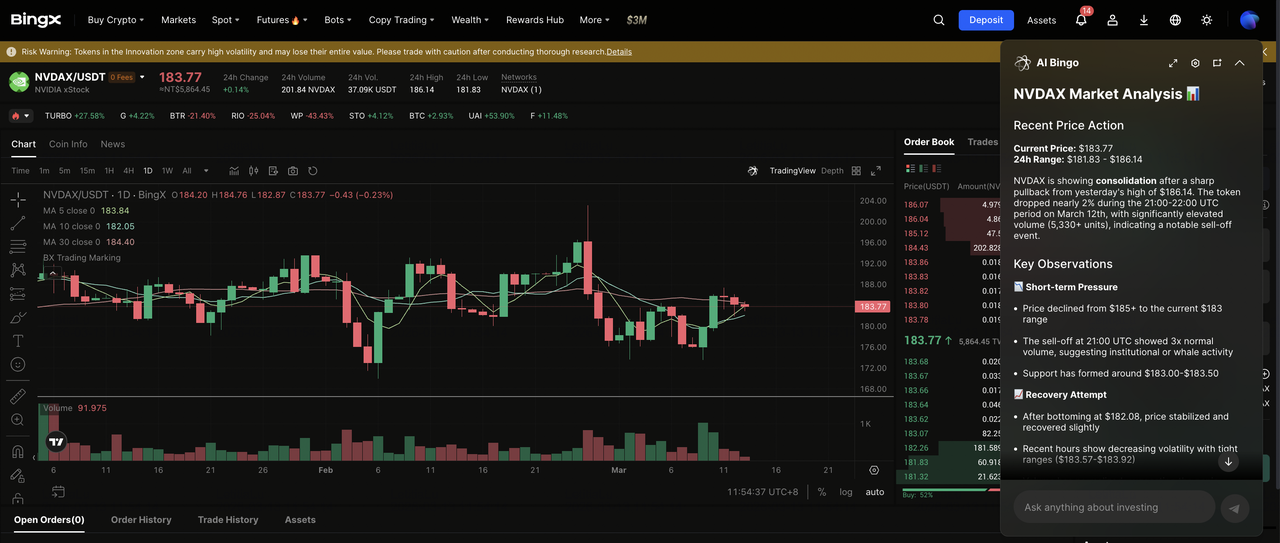
To buy tokenized stocks on BingX Spot:
- Log in to your BingX account and complete identity verification (KYC) if you have not already done so.
- Navigate to the Spot trading section and search for the tokenized stock you want to buy, for example NVDAX/USDT, GOOGLON/USDT, or METAON/USDT.
- Select the trading pair (typically paired against USDT) and review the current market price and order book depth.
- Choose your order type. A Market Order executes immediately at the current price. A Limit Order lets you set your preferred entry price and waits for the market to reach it.
- Enter the amount you wish to purchase. Because tokenized stocks on BingX support fractional ownership, you can invest with a small amount of USDT rather than having to buy a full share equivalent.
- Confirm the order. Your tokenized stock tokens will appear in your spot wallet once the trade is filled.
Spot tokenized stock trading is best suited for investors who want straightforward buy-and-hold exposure to equity price movements, benefit from 24/7 market access, or are building a diversified digital asset portfolio that includes both crypto and equity-linked instruments.
2. Trade Stock Futures on BingX TradFi
For traders who want leveraged exposure or the ability to go short on individual equities, BingX TradFi offers USDT-settled stock perpetual futures contracts on major companies including Oracle (ORCL), NVIDIA (NVDA), Tesla (TSLA), Coinbase (COIN), Circle (CRCL) and many others. These contracts allow you to trade the price movements of global stocks without holding the underlying asset or opening a traditional brokerage account.
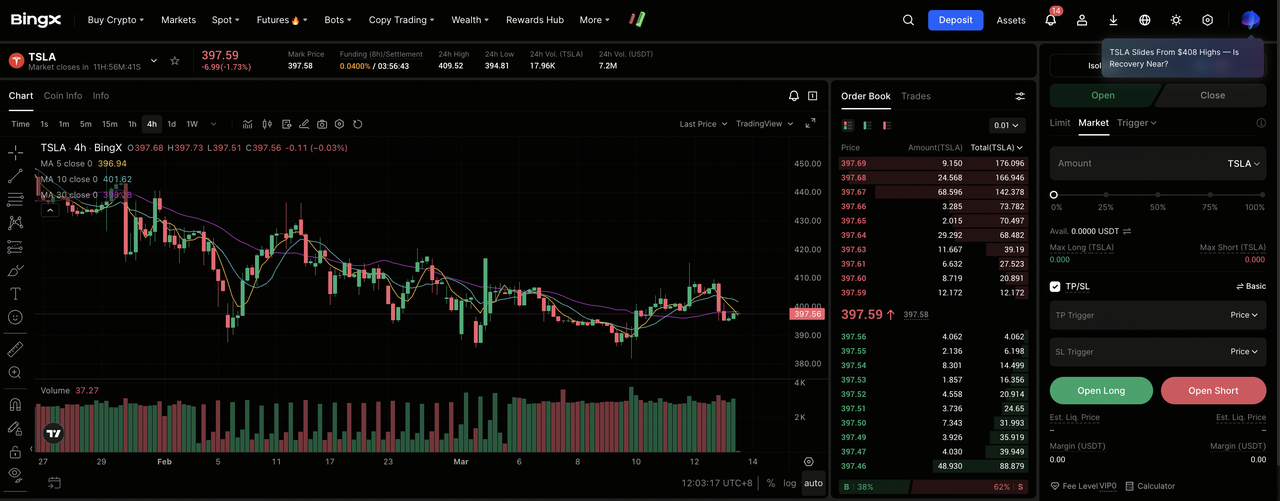
To trade stock futures on BingX TradFi:
- Navigate to the BingX Futures section and select Stock Futures from the product menu.
- Search for the stock perpetual contract you want to trade, such as ORCL/USDT, NVDA/USDT, or TSLA/USDT.
- Check the trading session before placing your order. Liquidity is typically stronger during regular exchange hours. For U.S. stocks, regular hours run from:
- Regular Hours: 9:30 AM – 4:00 PM Eastern Time (ET), Monday–Friday
- Pre-Market: 4:00 AM – 9:30 AM ET
- After-Hours: 4:00 PM – 8:00 PM ET
- Select your Margin Mode (Isolated or Cross) and set your leverage level. Lower leverage reduces liquidation risk, particularly around high-impact events such as earnings releases or major macro announcements.
- Choose Open Long if you expect the stock price to rise, or Open Short if you expect it to fall. Stock futures allow you to profit from price declines as well as gains, a flexibility that spot tokenized stock trading does not offer.
- Set Take-Profit (TP) and Stop-Loss (SL) levels before confirming the order. Pre-set exit levels are particularly important when trading around catalysts such as earnings reports, where post-announcement price swings can be large and fast-moving.
BingX TradFi stock futures are best suited for active traders who want leveraged directional exposure, the ability to hedge equity positions within a single platform, or who want to capitalize on short-term price movements driven by corporate events, macroeconomic data, or sector rotation.
Top 5 Risks and Limitations to Know Before Investing in Tokenized Stocks
Despite their growing popularity, tokenized stocks also introduce risks that investors should understand before allocating capital. Many of these risks stem from the early-stage nature of the market, the evolving regulatory landscape, and the technical infrastructure supporting blockchain-based assets.
- Limited Shareholder Rights: Many tokenized stocks available today do not grant full shareholder rights such as voting, dividend entitlements, or legal ownership of the underlying shares. Investors should carefully review the structure of any tokenized product before investing.
- Custodian and Counterparty Risk: Custodial tokenized stocks rely on a platform or regulated intermediary holding the underlying shares. If the custodian fails or experiences operational issues, investors may face losses even if the underlying stock retains its value.
- Smart Contract Vulnerabilities: Blockchain-based assets depend on smart contract code. Bugs, exploits, or security flaws in the contract governing a tokenized stock could lead to unexpected losses or asset freezes.
- Price Divergence from Underlying Shares: During periods of market stress, tokenized stocks may trade at premiums or discounts relative to the underlying shares. This can occur due to liquidity constraints or the derivative-like structure of some tokenized products.
- Regulatory and Liquidity Risks: While regulatory guidance is improving in regions such as the United States and the European Union, rules remain uncertain in many jurisdictions. In addition, tokenized stock markets are still relatively small, meaning lower liquidity and potential price impact for large trades.
Final Thought: Should You Invest in Tokenized Stocks in 2026?
Tokenized stocks represent a major shift in how investors access equity markets. By placing equity exposure on blockchain infrastructure, they enable features such as 24/7 trading, near-instant settlement, global accessibility, and native fractional ownership. As exchanges, fintech platforms, and institutional players explore tokenized equity frameworks in 2026, the sector is gradually moving from experimentation into the broader financial mainstream.
At the same time, tokenized stocks are not identical to traditional shares. Many products currently provide price exposure rather than full legal ownership, and investors should carefully evaluate factors such as custodial reliance, smart contract vulnerabilities, regulatory uncertainty, and potential price divergence from the underlying stock before investing.
Risk Reminder: This article is for informational purposes only and does not constitute investment advice. Tokenized stocks carry risks including market volatility, liquidity constraints, custodial risk, and smart contract vulnerabilities. Investors should conduct independent research before making any investment decisions.
Related Reading
- What Are Tokenized Stocks On-Chain, Could They Be the Next Big Trend in 2026?
- Does Owning Tokenized Stocks Grant You Shareholder Rights?
- What Is TradFi (Traditional Finance) On-Chain: A Beginner's Guide
- Price Exposure vs. Ownership: The New Way Traders Access TradFi Assets in 2026
- How to Trade Forex, Commodities, Stocks, and Indices With BingX TradFi: A Beginner’s Guide (2026)