
Tron (TRX) has become one of the most accessible and active blockchain ecosystems in 2026. Known for its low fees, fast transactions, and growing dApp landscape, the TRON Network now supports over 169 million token holders. From staking TRX and trading memecoins to minting NFTs and joining DeFi platforms, users are participating in the network at an unprecedented scale.
With this growth comes complexity. Tron wallets are no longer just basic storage tools. They offer features like staking rewards, governance access, NFT management, and multi-chain connectivity. But not every crypto wallet serves the same purpose. Some focus on simplicity, while others offer advanced controls and integrations for power users.
This guide explores seven of the best Tron wallets available in 2026. Whether you're just setting up your first wallet or looking to expand your activity across the Tron ecosystem, this list will help you find the right tool to manage your assets safely and participate confidently in everything Tron has to offer.
Why Is the TRON Ecosystem Popular in 2026?
In 2026, the TRON blockchain surged forward with major advancements, particularly its strategic pivot toward AI-integrated Web3 infrastructure, positioning it as a pioneering platform for the next generation of decentralized technology. With AI declared a core priority by founder Justin Sun and the TRON DAO, the network introduced innovations such as the TRON AI Core, support for autonomous AI agents capable of managing smart contracts, and AI-enabled NFTs that provide users direct access to generative AI tools.
TRON has also become one of the most active and strategically important blockchain ecosystems in 2026. From stablecoin transfers and DeFi trading to NFT activity and memecoin launches, its user base and infrastructure continue to grow at scale. The network remains dominant in stablecoin settlement, processing tens of billions of dollars in USDT transfers while upgrades to its energy-efficient Proof-of-Stake consensus and dynamic fee adjustments improve scalability, reduce costs, and enhance transaction efficiency.
In March 2026, TRON founder Justin Sun also reached a $10 million settlement with the U.S. SEC to resolve a civil fraud case related to alleged trading activity, with no admission of wrongdoing, bringing closure to a long-running regulatory dispute. This powerful blend of AI-driven innovation, robust DeFi ecosystem growth, regulatory clarity, and infrastructure development has helped solidify TRON’s role as a high-throughput, low-cost blockchain leader, driving continued adoption and developer activity across the global crypto landscape.
Read more: What Is USDT TRC‑20, Tether Stablecoin on the TRON Network?
TRON Network's Market Performance and On-Chain Activity
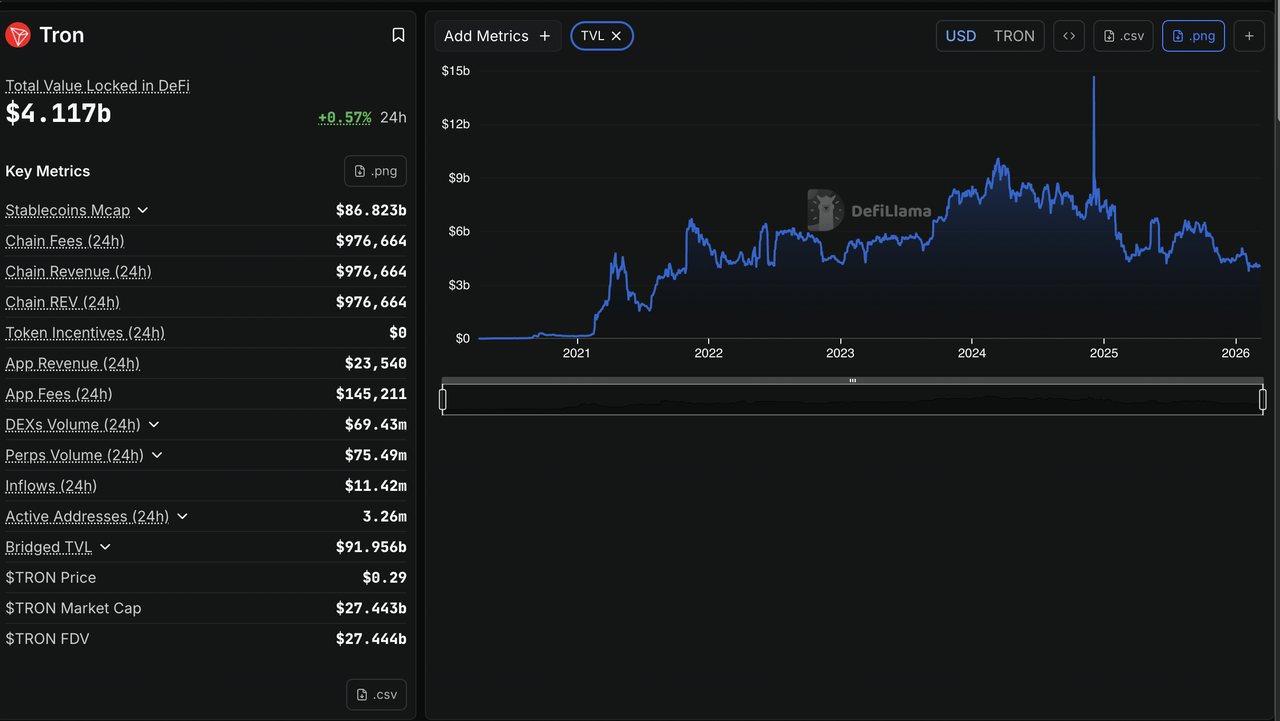
As of March 2026, Tron's Total Value Locked (TVL) is $4.117 billion. The network supports 3.26 million active addresses per day and processes $69.43 million in daily DEX trading volume. It also generates $976,664 per day in chain fees and $976,664 in chain revenue, reflecting sustained usage and transactional depth across its ecosystem.
These numbers place Tron among the top blockchain networks by core activity metrics, making it a critical platform not only for users but also for developers and institutions looking to build in high-volume environments.
TRON Stablecoins and Real-World Usage
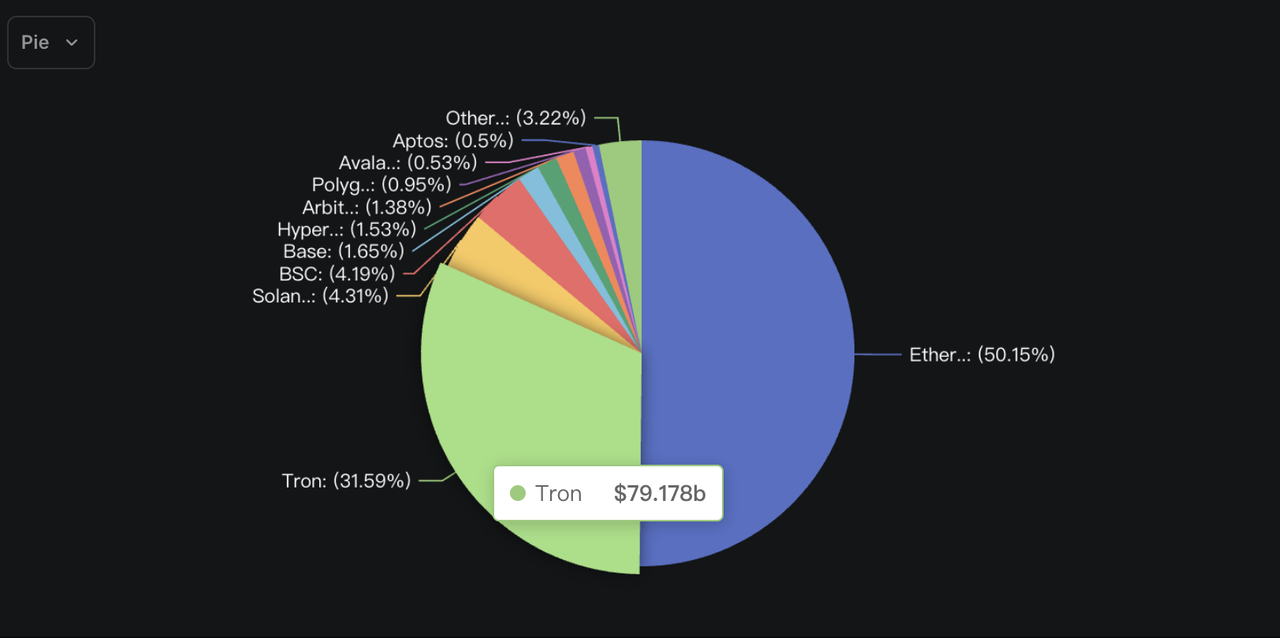
Tron accounts for over 31.5% of global stablecoin supply | Source: Defillama
Tron's most defining strength in 2026 is its dominance in stablecoin infrastructure. With a stablecoin market cap of approximately $86.7 billion on the network, Tron hosts a substantial portion of the global stablecoin supply, second only to Ethereum, and leads in USDT circulation with over $85 billion in USDT supply and USDT dominance at around 98%. USDT remains the dominant token on the network, representing the vast majority of Tron's stablecoin activity.
This widespread adoption reflects Tron's unique position as the preferred blockchain for fast, low-cost, dollar-pegged transfers. In regions where traditional banking is limited or expensive, users turn to Tron-powered USDT for remittances, savings, and day-to-day commerce. Stablecoins on Tron are no longer speculative tools; they have become essential financial infrastructure used by millions worldwide.
Tron's stablecoin momentum continues beyond USDT. In mid-2025, World Liberty Financial's USD1 stablecoin, backed 1:1 by short-term U.S. treasuries, cash, and dollar deposits, began minting on Tron, adding institutional-grade credibility and positioning the network as a preferred platform for large-scale, regulated, and high-profile stablecoin issuances. As more players explore stablecoin issuance, Tron is cementing its role as a foundational layer for next-generation financial infrastructure.
Read more: What Is USD1 Stablecoin Launched by the World Liberty Financial (WLFI)?
TRON Ecosystem Expansion and Developer Momentum
The broader Tron ecosystem has continued to evolve with new consumer-facing applications and backend infrastructure. The launch of SunPump in 2024 ushered in a new wave of memecoin innovation, drawing traders and creators into the network. NFT marketplaces like APENFT are gaining traction, with more users participating in digital art, collectibles, and gaming.
At the same time, Tron is forming deeper technical collaborations to stay ahead. Partnerships with Curve Finance have enhanced its DeFi stack, while integration with Oraichain is bringing AI-native tooling into the Tron ecosystem. These developments show that Tron is not only scaling user activity but also actively investing in long-term innovation across sectors.
Tron's combination of low-cost infrastructure, strong developer activity, and global stablecoin adoption makes it one of the most relevant blockchains for users and builders in 2026. At the same time, Tron is advancing through strategic technical integrations to maintain its edge. Collaborations like the ongoing integration with Oraichain continue to bring AI-native oracle capabilities and tooling into the ecosystem, supporting smarter smart contracts and decentralized AI solutions, while establishing DeFi enhancements, building on prior partnerships such as with Curve Finance, strengthening liquidity, yield opportunities, and overall financial primitives. These developments demonstrate that Tron is not only scaling everyday user activity but also investing heavily in cross-sector innovation, from memecoins and AI-enhanced NFTs to advanced DeFi. Tron's blend of low-cost, high-throughput infrastructure, thriving developer momentum, and unparalleled global stablecoin adoption positions it as one of the most practical and relevant blockchains for both everyday users and builders in 2026.
Read More: Top TRON Ecosystem Projects & dApps to Watch in 2026
Best Tron Wallets in 2026: Top 7 Picks
Tron wallets in 2026 go far beyond basic storage. Whether you're staking TRX, exploring DeFi protocols, trading NFTs, or managing team assets, the right wallet can unlock the full potential of the Tron ecosystem. Below are seven of the most trusted and widely used wallets this year, each offering a unique balance of security, usability, and ecosystem support.
1. TronLink
Source: TronLink Official Site
Best for: Tron-native users who want maximum control over staking, dApps, governance, and token management.
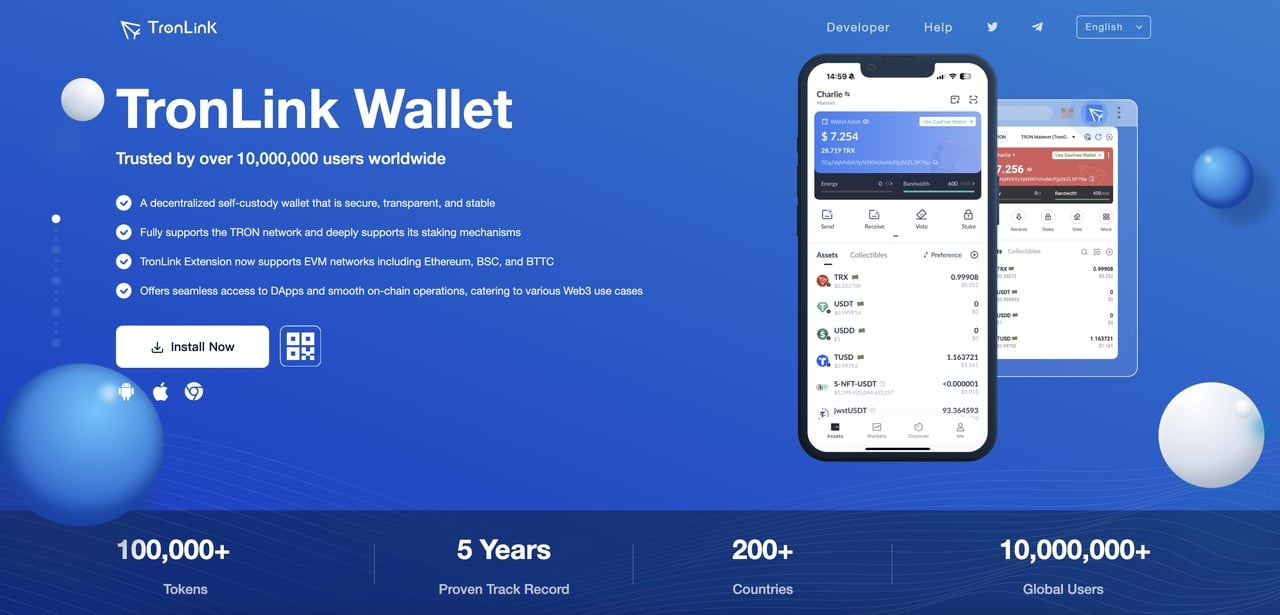
TronLink is the most widely adopted wallet built specifically for the Tron blockchain. It supports TRX, TRC-10, TRC-20, and TRC-721 tokens, and comes in both browser extension and mobile app formats. With more than 10 million users globally, TronLink is the wallet of choice for anyone serious about participating in the Tron ecosystem.
The wallet enables users to stake TRX, vote for Super Representatives, manage energy and bandwidth, and interact directly with Tron-based dApps. It also features multi-signature support, local key storage, and optional cross-chain compatibility with Ethereum, BNB Smart Chain, and BitTorrent Chain. TronLink does not currently support social login features.
Read More: How to Install and Create a TronLink Wallet in 2026
2. Klever Wallet
Source: Klever.io
Best for: Tron users who prefer a fast, mobile-first experience with staking and dApp browsing built in.
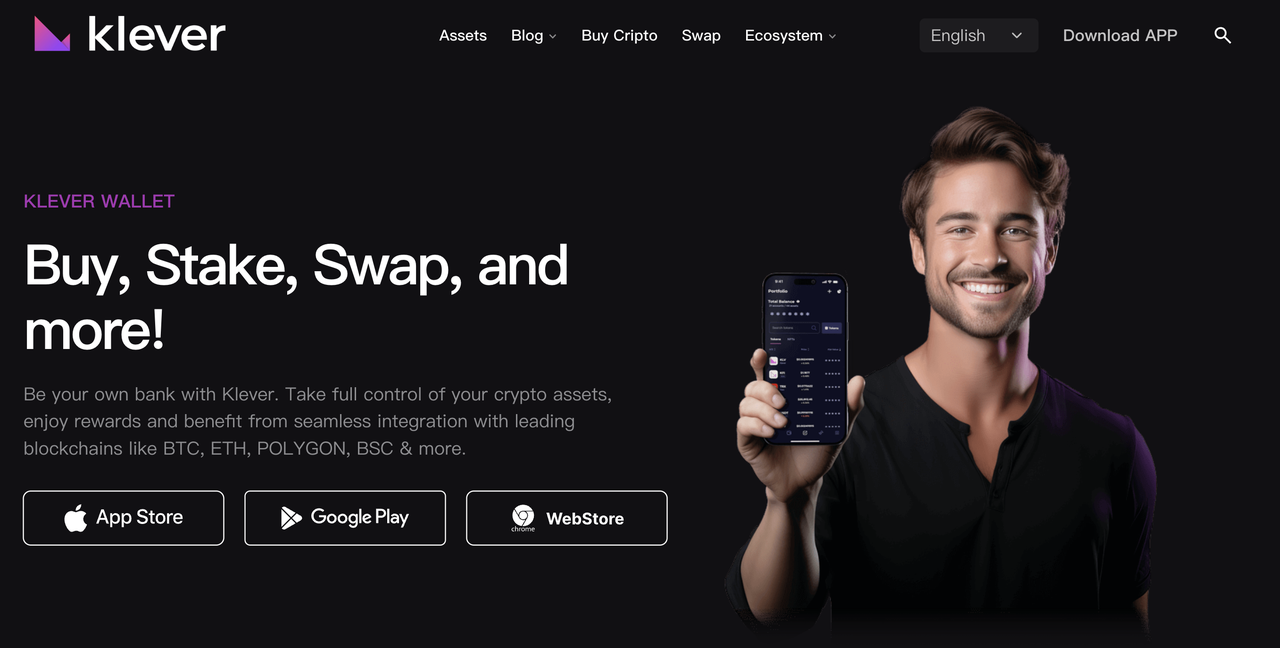
Klever Wallet is a non-custodial, multi-chain mobile wallet originally developed as TronWallet. It supports over 10,000 assets and includes native staking for TRX, along with an in-app browser for dApp interaction. Klever also has its own ecosystem token Klever (KLV) and a growing suite of crypto services.
With a clean interface and military-grade encryption, Klever focuses on providing a secure yet easy-to-use experience. It's especially useful for Tron-focused users who want to swap, stake, and browse dApps without leaving the mobile app environment. It supports multiple chains and offers social login via email for easier onboarding.
3. Trust Wallet
Source: Trust Wallet Official Site
Best for: New and intermediate users who want a mobile-first wallet that supports Tron alongside other major blockchains.
Trust Wallet is one of the most widely used mobile wallets in the world, backed by Binance and trusted by over 140 million users. While not Tron-specific, it offers full support for TRX and TRC-20 tokens, making it a solid option for users who want to hold, stake, or transfer Tron assets in a broader multi-chain portfolio. They also have their own ecosystem token Trust Wallet Token (TWT).
What makes Trust Wallet especially appealing is its clean interface and built-in features like token swaps, staking, and NFT management. It supports over 100 blockchains including Ethereum, BNB Chain, Solana, and Tron, allowing users to manage all their crypto assets in one place. It also provides optional social login features for a smoother setup.
4. Atomic Wallet
Source: atomicwallet.io
Best for: Users with diverse crypto portfolios who want to stake TRX and manage everything from a single app.
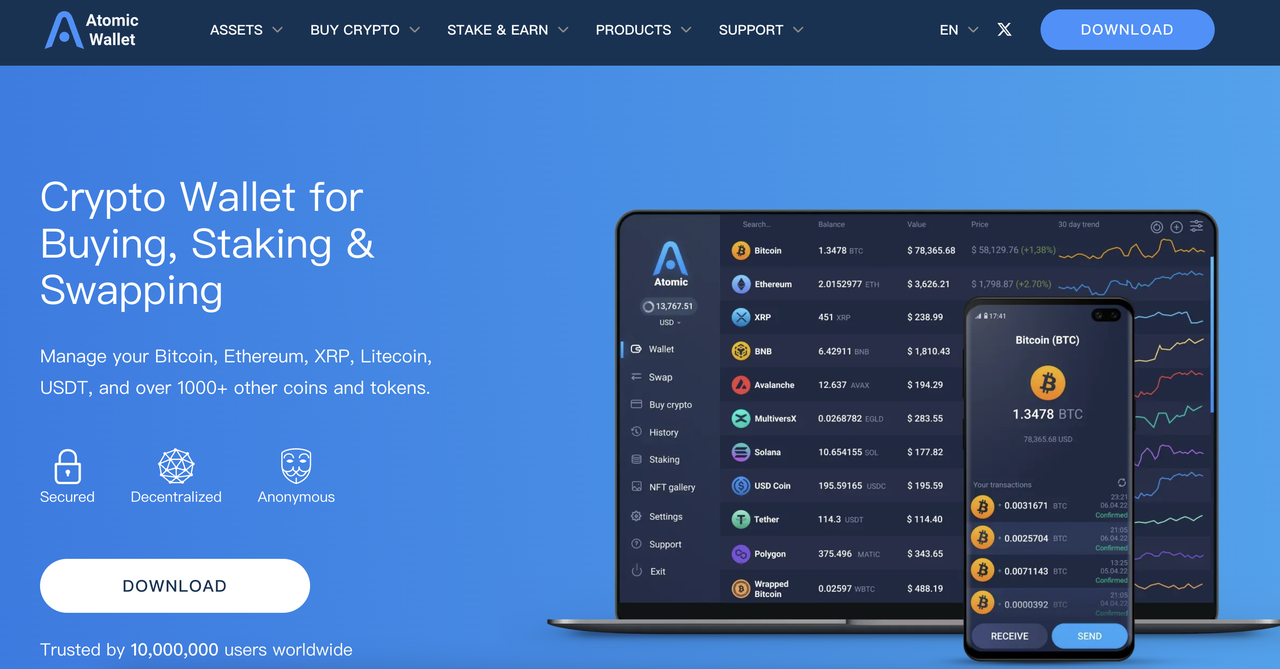
Atomic Wallet is a non-custodial multi-asset wallet that supports over 500 cryptocurrencies, including TRX and TRC-20 tokens. It offers built-in staking for TRX and other major coins, as well as an integrated exchange that lets users swap assets without leaving the app.
Available on desktop and mobile, Atomic Wallet gives users full control over their private keys while offering a balance between functionality and simplicity. It supports cross-chain assets but does not include social login options.
5. Exodus
Source: Exodus Wallet
Best for: Users who value clean design, ease of use, and native staking features on both desktop and mobile.
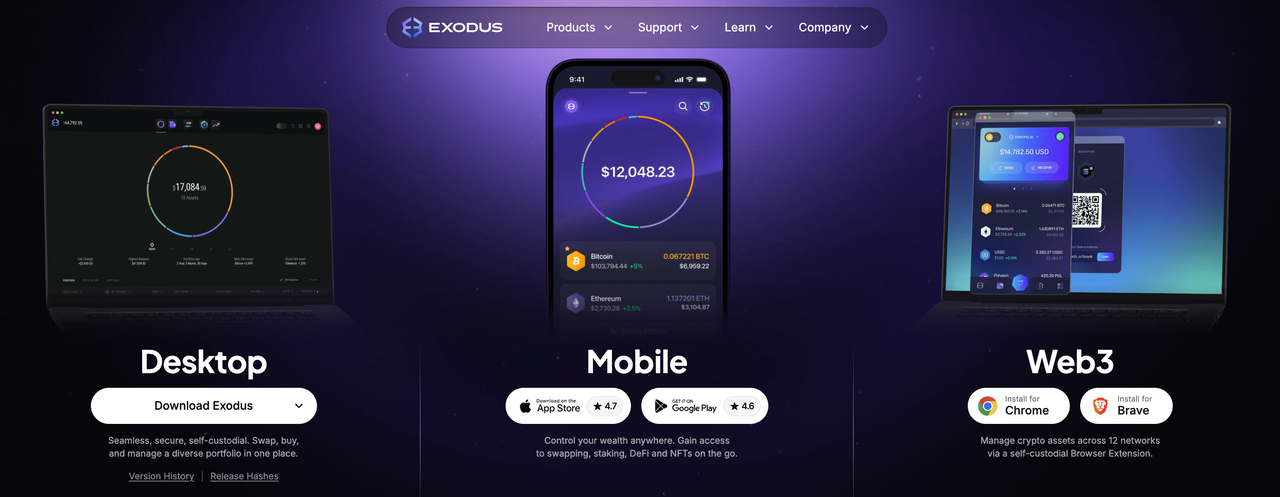
Exodus offers a sleek, beginner-friendly experience while still delivering solid Tron support. It supports TRX and TRC-20 tokens and includes a built-in exchange that allows users to swap assets directly within the wallet. The wallet is available on desktop, mobile, and as a browser extension, with real-time portfolio tracking and visual charts.
While Exodus does not include native dApp integration for Tron, it does support TRX staking and private key control. It also supports dozens of blockchains and offers social login for onboarding through platforms like Apple ID or Google.
6. Guarda Wallet
Source: Guarda Wallet
Best for: Users who want a Tron wallet that works across web, desktop, and mobile with optional hardware support.
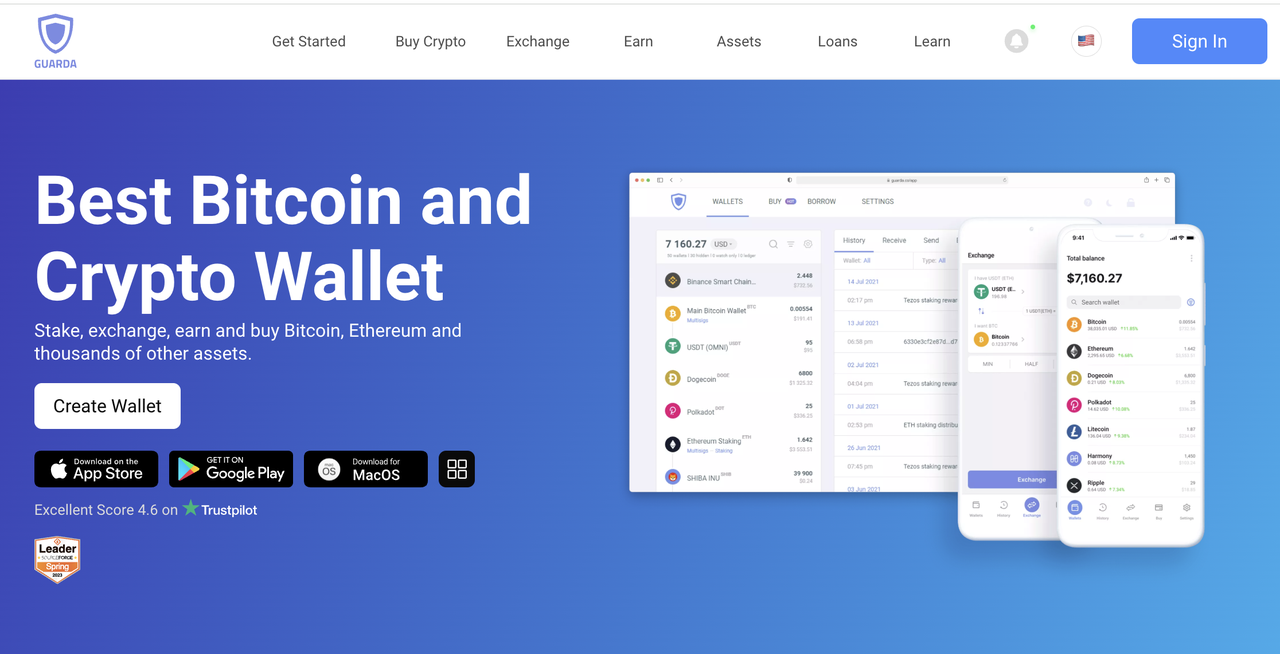
Guarda Wallet is a non-custodial wallet supporting over 50 blockchains and 400,000 assets, including TRX and all Tron token types. It allows users to stake TRX, buy and swap tokens, and manage their portfolio from any device. Guarda also integrates with Ledger hardware wallets for added security, though hardware use is optional.
Known for its privacy-focused design, Guarda stores all private keys locally and offers encrypted backups. It supports cross-chain tokens but does not offer social login options at this time.
7. TotalSig
Source: TotalSig Official Site
Best for: DAOs, small teams, or advanced users who need shared wallet control and on-chain Tron governance access.
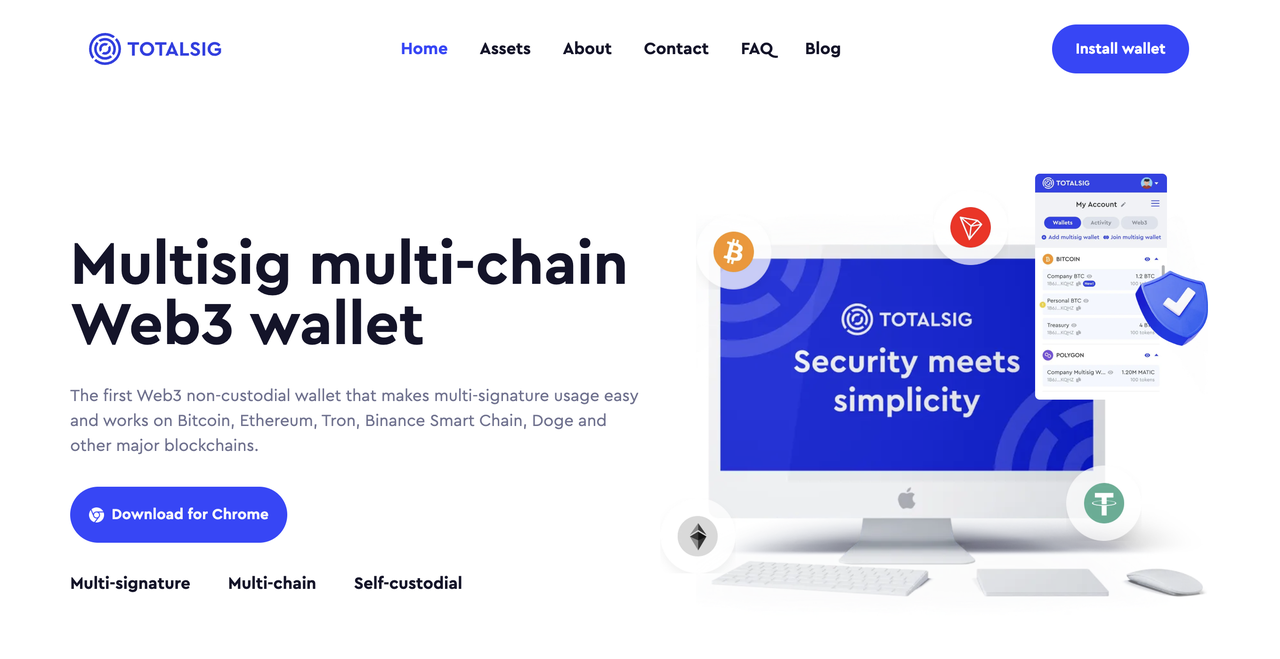
TotalSig is a specialized multi-signature wallet built specifically for the Tron ecosystem. It allows multiple users to co-manage a wallet by requiring approval from multiple signers before executing transactions. This is particularly useful for DAOs, community treasuries, and collaborative projects where asset security and accountability are critical.
Beyond multisig control, TotalSig also supports staking, governance participation, and Super Representative voting directly from the shared wallet. While it lacks multi-chain support or social login options, it fills a vital role for users who need secure, role-based access to Tron assets.
Tron Wallet Comparison Overview: How to Choose the Right Wallet
With multiple wallet options available, choosing the right one depends on what you plan to do within the Tron ecosystem. Some wallets are built specifically for Tron, while others prioritize cross-chain access, mobile convenience, or multi-user controls.
Top Tron Wallets: A Comparison (2026)
| Wallet Name | Best For | Platforms | Staking | NFT | dApp Browser | Cross-Chain Support | Social Login or Easy Onboarding |
| TronLink | Tron-native power users | Mobile, Browser Extension | Yes | Yes | Yes | Limited | No |
| Klever | Mobile Tron users | Mobile | Yes | Yes | Yes | Limited | Yes (email signup) |
| Trust Wallet | Multi-chain beginners | Mobile | Yes | Some | No | Strong | Yes (mobile-first setup) |
| Atomic Wallet | Cross-chain portfolio users | Desktop, Mobile | Yes | No | No | Strong | Partial (simplified flow) |
| Exodus | Easy desktop and mobile sync | Desktop, Mobile | Yes | No | No | Moderate | Yes (no seed phrase at signup) |
| Guarda | Cross-platform Tron users | Web, Desktop, Mobile | Yes | No | No | Strong | No |
| TotalSig | DAOs and shared wallets | Web | Yes | No | No | None | No (requires manual setup) |
Choosing the right wallet is essential for anyone engaging with the Tron ecosystem in 2026. Whether you're holding TRX, staking it, exploring DeFi platforms, or minting NFTs, your wallet is the main access point to the network.
1. Security First: Look for features like local private key storage, encrypted backups, and optional two-factor authentication. Some wallets offer multi-signature protection or hardware wallet pairing for added safety.
2. Custodial vs. Non-Custodial: Custodial wallets are easy to use but place your keys in someone else's hands. Non-custodial wallets give you full control, meaning you are responsible for keeping your keys safe.
3. Tron-Specific Functionality: A good Tron wallet should support TRX and token standards like TRC-10, TRC-20, and TRC-721. Features like staking, Super Representative voting, and energy management are key.
4. Device and Ecosystem Compatibility: Choose a wallet that works across your preferred devices and syncs between them. Look for token swaps, NFT galleries, and access to Tron's broader ecosystem.
5. Onboarding and User Experience: Some wallets offer features like social login or email-based setup, while others require manual key handling. Pick what fits your experience level.
6. Cross-Chain Compatibility: Tron-only users can stick with TronLink or Klever. For managing multiple chains, consider wallets like Trust Wallet or Atomic Wallet.
Read more: What Is USDT TRC‑20, Tether Stablecoin on the TRON Network?
Top 5 Factors to Consider When Using TRON Wallets in 2026
As Tron's user base expands, so do the risks. Whether you're staking TRX or trading NFTs, keeping your wallet safe requires more than just a good app. Here are five key risks to watch for in 2026.
1. Beware of Fake Wallets and Phishing Scams: Malicious clones of TronLink and Klever often appear in app stores and ads. Only download wallets from official sites or verified developers, and never enter seed phrases on unfamiliar pages.
2. Stay Away From Risky dApps and Smart Contract Approvals: Some dApps ask for token access that can later be abused. Check what permissions you're giving, and regularly revoke unused approvals in your wallet settings.
3. Avoid TRC-20 Spam and Dust Attacks: Random tokens sent to your wallet can be phishing attempts or tracking tools. Avoid interacting with unknown airdrops unless you've verified the source.
4. Review Energy and Bandwidth Limits: Tron replaces gas fees with energy and bandwidth. If you run out, you may be unable to send tokens. Staking TRX helps avoid this by generating the resources you need.
5. Prevent Lost Backups: Non-custodial wallets require secure seed phrase storage. If you lose it, no one can recover your funds. Back it up offline and never share it with anyone.
Final Thoughts
The Tron ecosystem in 2026 is more active and diverse than ever. With millions of users transacting daily across DeFi platforms, NFT marketplaces, and stablecoin applications, your choice of wallet plays a central role in how safely and effectively you participate.
There is no single solution that fits everyone. Wallets like TronLink and Klever are ideal for users deeply engaged in the Tron ecosystem, while tools like Trust Wallet or Atomic Wallet work well for those managing assets across multiple chains. For collaborative teams or DAOs, TotalSig offers a unique set of tools designed for governance and shared control.
As the network continues to grow, staying informed about wallet features, risks, and integrations can help you make better decisions, not only about where to store your assets, but how to use them securely and strategically in the Tron ecosystem.
Related Reading
1. Top TRON Ecosystem Projects & dApps to Watch in 2026
2. How to Install and Create a TronLink Wallet in 2026
3. What Are the Best Sui Wallets of 2026?
4. What Are the Best Solana Wallets to Use in 2026?
5. What Are the Best TON Wallets for Toncoin and Jetton Tokens in 2026
