

The XRP Ledger has surpassed 8.1 million active wallets, with daily active addresses hovering close to 32,000, indicating consistent, real-world network utility rather than just speculative noise. For investors entering the space or consolidating their positions, picking the wrong wallet can result in losing total access to funds, unnecessary friction when trading, or exposure to preventable security breaches. Before buying a single XRP, it is crucial to understand where and how you will store your assets.
Quick Answer: An XRP wallet is the software or hardware device that stores your private keys and allows you to interact with the blockchain. To choose the ideal one: (1) determine whether you are actively trading or holding long-term; (2) use a hardware wallet for large capital allocations; (3) opt for Xaman or Trust Wallet for frequent on-chain operations; (4) consider a regulated exchange like BingX for simplified custody with deep liquidity and access to diverse trading pairs.
What is an XRP Wallet?
An XRP wallet does not actually store physical coins. Instead, it holds the cryptographic keys that prove ownership of a specific balance recorded on the XRP Ledger. Think of it like a traditional bank card: the funds are not inside the plastic itself, but the card grants you secure access to them.
Every wallet operates with two fundamental components. The public key acts as your account or deposit address and can be shared publicly without any security risk to receive XRP. The private key acts as the master password that authorizes transactions—whoever holds the private key completely controls the funds. Losing your private key means losing your assets permanently, with zero chance of recovery.
Additionally, wallets generate a seed phrase (recovery phrase), typically a 12 or 24-word sequence that serves as a backup for your private key. Writing this phrase down on paper and storing it in a secure offline location is the absolute baseline security practice for any long-term holder.
Custodial vs. Non-Custodial: The Ultimate Distinction
In custodial wallets, a third-party platform manages the private keys on your behalf. This is the standard exchange model: highly practical, featuring customer support, and removing the risk of losing your seed phrase. The trade-off is that you technically do not "own" the underlying XRP; you hold a credit balance with the platform. If the exchange faces insolvency or a security breach, you enter the line of creditors.
In non-custodial wallets, you maintain absolute control over your private keys and bear sole responsibility for your security. This provides maximum self-sovereignty but requires strict operational discipline.
The XRP Ledger Minimum Reserve: The Trap for Beginners
Before setting up a native wallet on the XRP Ledger, you must be aware of this specific protocol rule: to activate a new XRP wallet, you must deposit at least 10 XRP, which is locked as a minimum base reserve on the network. This amount is not a transaction fee, but a core protocol requirement of the XRP Ledger to prevent spam attacks.
In practice, if you send exactly 10 XRP to a brand-new non-custodial wallet, your available spendable balance will display as zero. These 10 XRP remain frozen for as long as the account is active. If you eventually choose to deactivate the account, a portion can be recovered, but until then, they are untouchable.
The historical push to reduce this minimum reserve reflects the community's effort to lower barriers to entry and onboard new users, which is essential for expanding the XRP Ledger ecosystem. While the current base reserve sits at 10 XRP, it can be adjusted over time through network validator voting.
For users looking to bypass this initial friction, keeping assets on a centralized custodial platform like BingX completely eliminates this requirement. You can trade and move any amount without locking up capital in network reserves.
Types of XRP Wallets Available
Hot Wallets (Software Wallets)
Hot wallets are applications running on desktops, mobile devices, or browser extensions that allow you to store, send, and receive XRP. They are highly user-friendly and provide instant access, making them ideal for daily transactions and smaller balances. However, because they run on internet-connected devices, they are inherently more vulnerable to online vectors like malware or phishing attacks.
They are the right choice for active users dealing with smaller amounts, though security risks scale alongside your portfolio value.
Cold Wallets (Hardware Wallets)
Hardware wallets store your private keys completely offline, isolated from any virtual threats. These physical devices are the gold standard for long-term storage, though they require a bit more technical familiarity to operate effectively.
Resembling a secure USB drive, they ensure your private key never leaks to an internet-exposed environment. For any capital size that you consider significant, utilizing a hardware wallet is the industry benchmark.
Exchange Custodial Wallets
The most common route for active traders. You keep your XRP directly on the trading platform, removing the need to manage seed phrases or worry about on-chain minimum reserves. For instance, BingX allows you to buy and trade XRP with support for over 1,000 crypto assets, featuring robust multi-layer protection including Two-Factor Authentication (2FA), anti-phishing codes, and passkeys. For active market participants shifting between spot and derivatives, this convenience is a massive advantage.
The Best XRP Wallets
1. BingX (Custodial, Best for Active Trading)

For traders requiring deep liquidity and fast execution, BingX delivers a highly comprehensive setup. XRP purchases on BingX start at just $10, supported by an expansive catalog of over 1,000 digital assets and a wide array of global payment rails. The onboarding process incorporates secure KYC verification, 2FA, and passkeys, fully aligning the platform with tier-one industry compliance and security standards.
Beyond the standard XRP/USDT spot market, BingX offers advanced features like Copy Trading—enabling users to automatically mirror the positions of top-tier traders—and an active XRP Futures market for complex hedging strategies. For investors focused on capital agility without wanting to manage their own cryptographic custody infrastructure, this ecosystem is tough to beat.
2. Xaman (Formerly XUMM) (Non-Custodial, Best for Native XRPL Ecosystem Interaction)
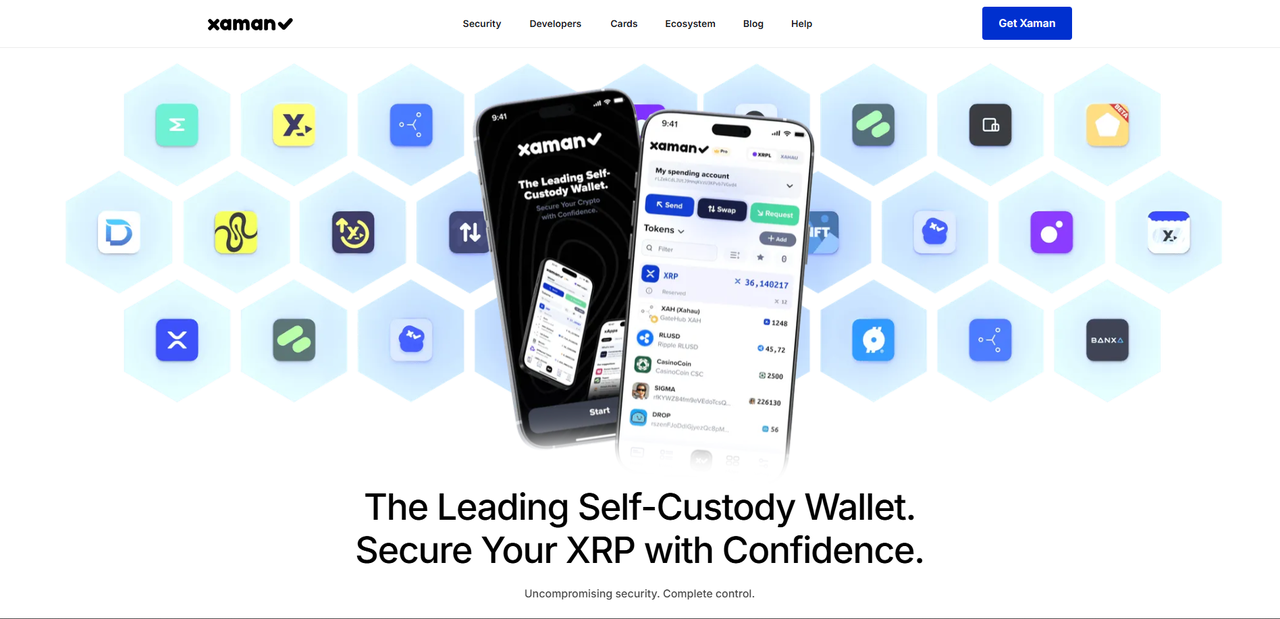
Xaman is the premier non-custodial application built specifically for the XRP Ledger, serving as the main gateway for over 2 million users interacting with the network. The rollout of Xaman 5.0.0 brought advanced virtual asset features and offline resilience, giving users the power to sign transactions and manage Trust Lines even when disconnected from central node infrastructure.
It is the go-to option for users wanting to interact with the XRPL's native decentralized exchange (DEX), plug into DeFi protocols, manage custom tokens issued on the network, or simply maintain absolute sovereign control over their keys. While the learning curve is steeper than a centralized exchange, the level of network access and autonomy is unmatched.
3. Ledger Nano X (Hardware Wallet, Best for Long-Term Cold Storage)
The Ledger Nano X offers premium cold storage powered by a certified secure element chip alongside seamless Bluetooth connectivity, making it the industry standard for offline XRP security. Because private keys never leave the physical device, it completely neutralizes the most common remote and online attack vectors.
While purchasing a dedicated hardware unit requires an upfront investment (typically ranging from $79 to $149), the cost is easily justified when compared against the value of a substantial long-term crypto portfolio. For investors building an absolute cold-storage position in XRP, this device is a foundational security asset.
4. Trust Wallet (Hot Wallet for Beginners)
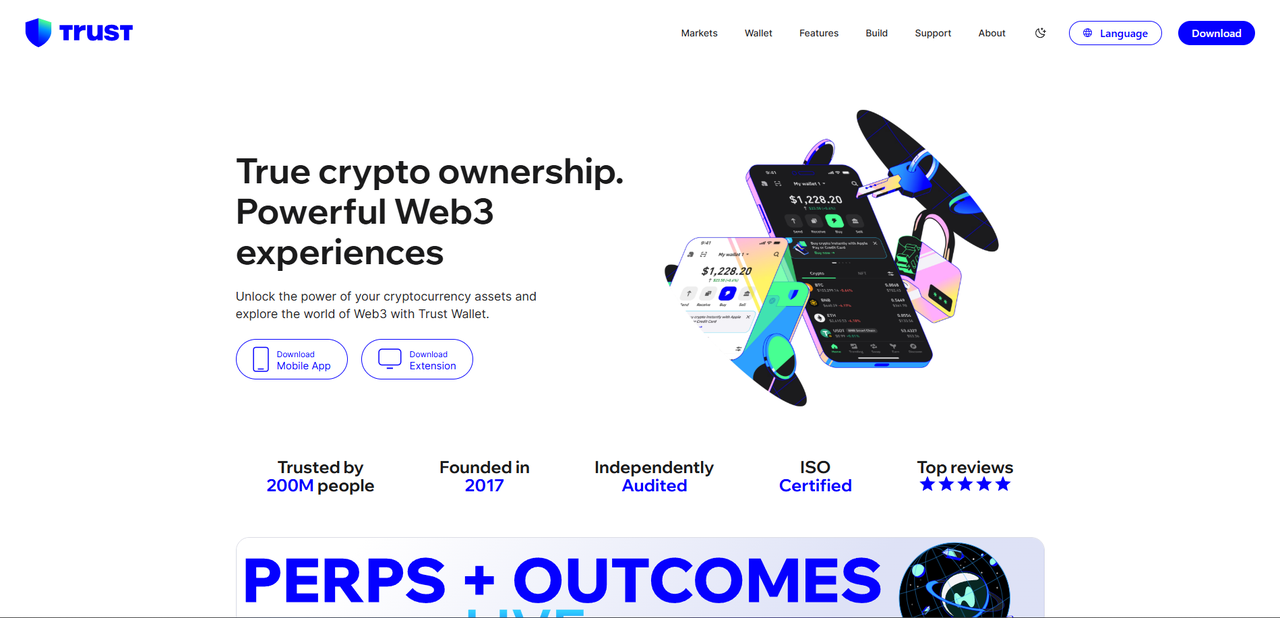
Trust Wallet is highly recommended for crypto newcomers looking for an intuitive user interface and robust multi-chain support. Available on both iOS and Android, it allows you to store XRP alongside your entire digital asset portfolio in one place, without requiring advanced technical expertise. The trade-off is that, as a hot wallet, its security relies entirely on the user's personal security practices.
5. Exodus (Multi-Asset Hot Wallet)
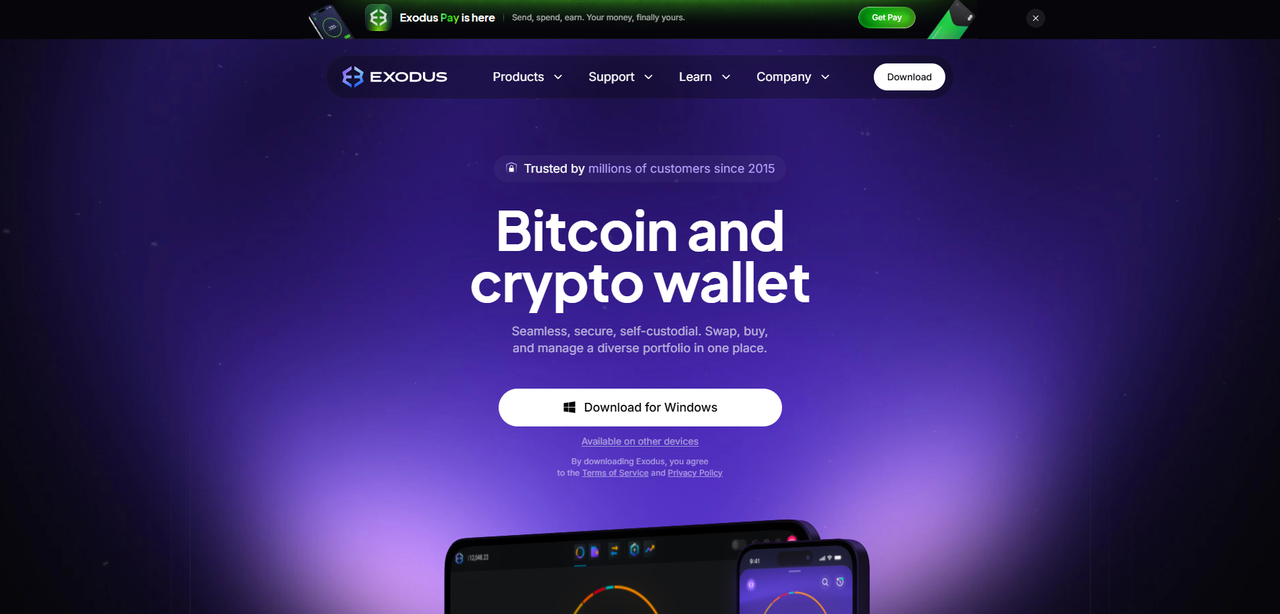
One of the most popular hot wallets for users managing highly diversified portfolios. It offers native support for XRP, a sleek, clear visual dashboard, and seamless integration with hardware wallets for investors looking to upgrade their security without switching to a different application.
How to Choose the Right XRP Wallet for Your Profile
The ideal choice comes down to two main factors: transaction frequency and the total value of the assets you are securing.
|
User Profile |
Recommended Wallet |
Key Reason |
|
Active Trader |
BingX (Custodial) |
Instant liquidity, no private key management required |
|
Beginner (Self-Custody) |
Trust Wallet |
User-friendly interface, simple onboarding/setup |
|
XRPL Native / DeFi User |
Xaman |
Direct access to DEXs, Trust Lines, and XRPL protocols |
|
High-Net-Worth / Long-Term Holder |
Ledger Nano X |
Offline key storage for cold-storage security |
|
Diversified Portfolio Holder |
Exodus |
Multi-crypto support with hardware wallet integration |
Destination Tag: The Mistake That Costs People Their XRP
Centralized exchanges utilize a single XRP address for all users. The Destination Tag acts as a unique identifier to route the deposit to your specific account. When transferring XRP to an exchange, including the correct Destination Tag is mandatory. Conversely, when sending XRP to a self-custody wallet, it is generally not required.
Omitting the Destination Tag when depositing to an exchange is one of the most common user errors in crypto, and retrieving those funds can be incredibly difficult. While some platforms can recover the assets via a support ticket, the process often takes weeks and usually incurs a fee. Whenever you deposit to BingX or any other exchange, always double-check the Destination Tag before finalizing the transaction. You can consult the BingX Deposit Tutorial to verify the correct field requirements before sending.
Security Best Practices: The Minimum Checklist for Every XRP Holder
No matter which wallet you choose, these security measures are absolute non-negotiables:
- Write down your seed phrase on paper (never store it in your phone's notes app or email) and keep it in a secure, physical location.
- Enable Two-Factor Authentication (2FA) on all your exchange accounts.
- Never share your private keys or seed phrase with anyone, under any circumstances.
- Use separate addresses when receiving funds from unknown sources.
- Double-check the destination address before confirming any transaction.
At BingX, user security is enhanced with customizable anti-phishing codes, login notifications, and withdrawal address whitelists to mitigate social engineering attacks. Furthermore, the platform publishes monthly Proof of Reserves (PoR) reports, verifying that customer assets are fully backed 1:1.
Current XRP Outlook: Is It Worth Holding?
Spot XRP ETFs in the US crossed the $1 billion mark in assets under management (AUM) just four weeks after launching in the final quarter of 2025, with 775.4 million XRP held in custody by the end of the first quarter of 2026.
The XRPL reached an all-time high of $2.25 billion in market capitalization for tokenized Real-World Assets (RWAs), positioning the network for future ecosystem growth. For investors, this indicates that the infrastructure backing XRP is being adopted by institutions, not just retail traders, shifting the asset's risk profile over the medium term. Always implement a solid risk management strategy before allocating capital to any digital asset.
FAQ: Frequently Asked Questions About XRP Wallets
1. What is the best XRP wallet for beginners?
For those just starting out, BingX offers the most seamless entry point: registration takes minutes, it features an intuitive interface, and there is no need to manage private keys or maintain a minimum reserve. Users who prefer self-custody from day one can opt for Trust Wallet, which offers a beginner-friendly UI and native XRP support.
2. Do I need to pay to set up an XRP wallet?
Creating a wallet is entirely free, but activating a non-custodial wallet on the XRP Ledger requires locking 10 XRP as a minimum protocol reserve. This amount is not a fee; rather, it remains locked in the account as long as the wallet exists. This requirement does not apply to custodial exchange accounts like BingX.
3. What happens if I lose my seed phrase?
Without your seed phrase, access to a non-custodial wallet is permanently lost. There is no customer support desk or email recovery process. Losing your seed phrase is equivalent to losing your funds forever, making physical backups absolutely essential.
4. Can I keep my XRP in multiple wallets simultaneously?
Yes, and many experienced holders do exactly that—keeping a portion on an exchange for active trading and the rest in a hardware wallet for long-term storage. There is no limit to the number of wallets an individual can hold.
5. What is a Destination Tag and why is it mandatory?
A Destination Tag is a unique numerical code used by centralized exchanges to identify which specific user account should be credited, as exchanges typically use a single shared XRP address. Sending XRP to an exchange without the correct Destination Tag can lead to lost funds or a lengthy recovery process.
6. Is it safe to leave XRP on an exchange?
It depends on the exchange. Platforms with an established track record, auditable Proof of Reserves, and robust multi-layered security—such as BingX—provide a reliable level of protection for active trading. For large amounts or long-term holdings, the industry standard is to transfer funds to a non-custodial wallet.
7. How does the security of the Ledger Nano X work?
The device utilizes a certified secure element chip (EAL5+) that keeps private keys entirely offline. Even if the connected computer is compromised by malware, the keys are never exposed. Every transaction must be physically verified and confirmed on the device itself.
8. Are XRP wallets regulated?
Regulatory frameworks globally and locally are tightening. Starting in 2026, exchanges face stricter mandates to identify destination wallet owners, resulting in enhanced traceability for transfers between platforms and private wallets. This aligns with global anti-money laundering standards and advancing VASP (Virtual Asset Service Provider) regulations, meaning users will experience more rigorous KYC protocols on regulated platforms.
Key Takeaways
- XRP wallets are split into custodial (exchanges) and non-custodial (user-controlled keys); choose based on your trading style and risk tolerance.
- Every native wallet on the XRP Ledger requires a locked 10 XRP protocol minimum reserve; custodial exchanges waive this requirement.
- For active trading, BingX combines high liquidity, multi-tier security, Copy Trading, and access to over 1,000 assets in a single ecosystem.
- For native XRPL ecosystem access including DeFi and DEXs, Xaman (formerly Xumm) is the industry benchmark with over 2 million active users.
- The Ledger Nano X remains the market standard for secure, long-term cold storage of high-value crypto portfolios.
- The Destination Tag is mandatory when depositing to exchanges; omitting it can cause permanent loss of funds.
- Seed phrases must be written down on paper and stored securely offline; there is no alternative recovery method.
- US spot XRP ETFs have already amassed $1 billion in AUM, signaling strong institutional interest. Monitor the real-time XRP price on BingX before making allocation decisions.
Related Reading
- How to Invest in XRP Ledger (XRPL): A Beginner's Guide to Buying XRP
- What Is XRP? Complete Guide on How the XRP Ledger Works (2026)
- XRP vs. Bitcoin Wealth Distribution: Which Is More Centralized?
- Crypto Exchange Security: A Guide to 2FA, Cold Storage, and Account Protection
- Top Cryptocurrency Exchanges for Spot and Futures Trading
